
Last updated: November 6, 2026
Saline implants contain sterile saltwater and usually deflate noticeably if they rupture; silicone implants contain gel, generally feel more like breast tissue, and need routine rupture imaging because a rupture may be silent. We discuss these differences during breast augmentation consultations at CosmetiCare in Newport Beach.
What is the difference between saline and silicone breast implants?
Both types have a silicone outer shell. Tissue coverage, incision options, and the follow-up plan you are comfortable maintaining also matter when choosing between them.
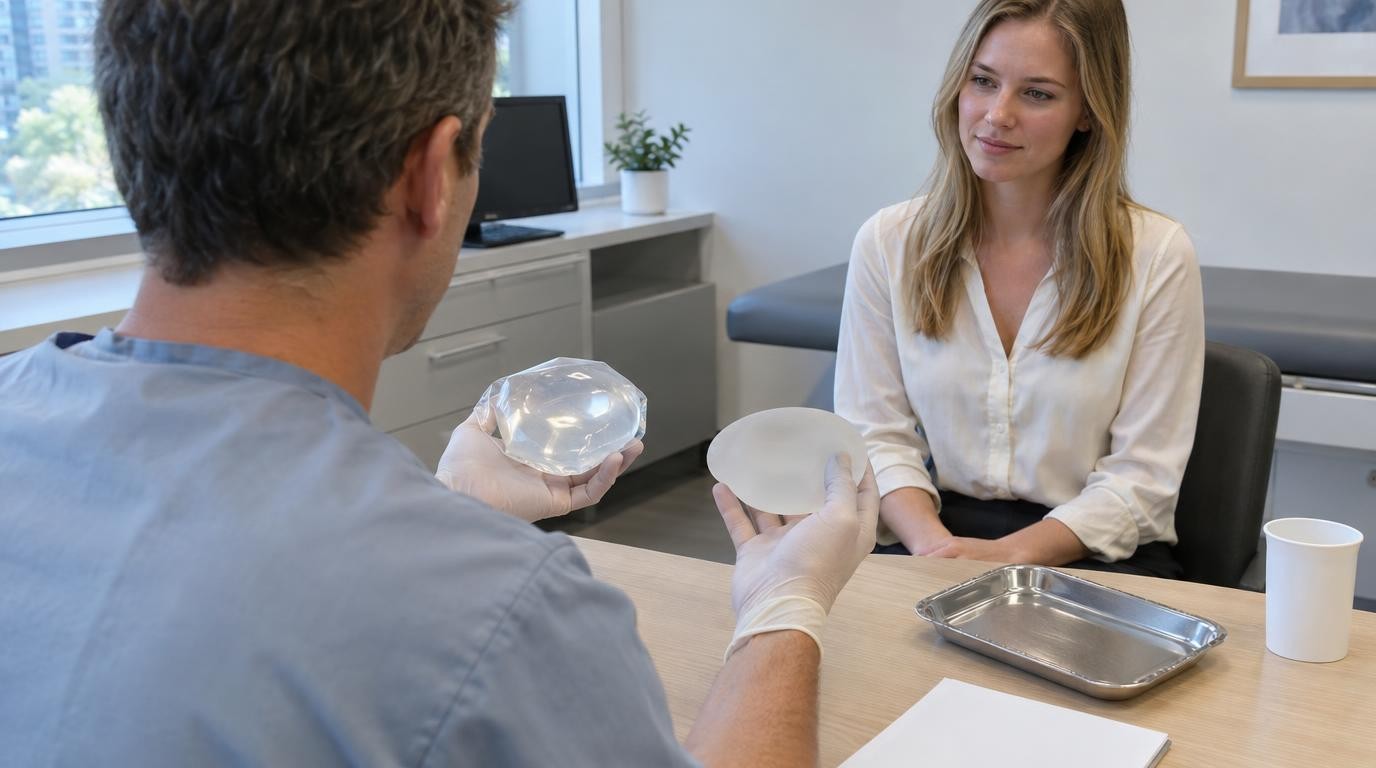
The Mayo Clinic’s saline-versus-silicone patient guide states that saline implants are available for cosmetic augmentation at age 18 or older and silicone-gel implants at age 22 or older. The comparison can be summarized this way:
| Consideration | Saline | Silicone gel |
|---|---|---|
| Filling | Sterile saltwater | Silicone gel |
| Feel | May feel firmer | Generally feels more like breast tissue |
| Rippling | May be more noticeable with limited tissue coverage | May be less noticeable, but can still occur |
| Rupture | Deflation usually changes breast size or shape | A rupture may have no obvious symptoms |
| Follow-up | Clinical follow-up; no routine rupture imaging without symptoms | Clinical follow-up plus recommended rupture imaging |
What are saline breast implants filled with?
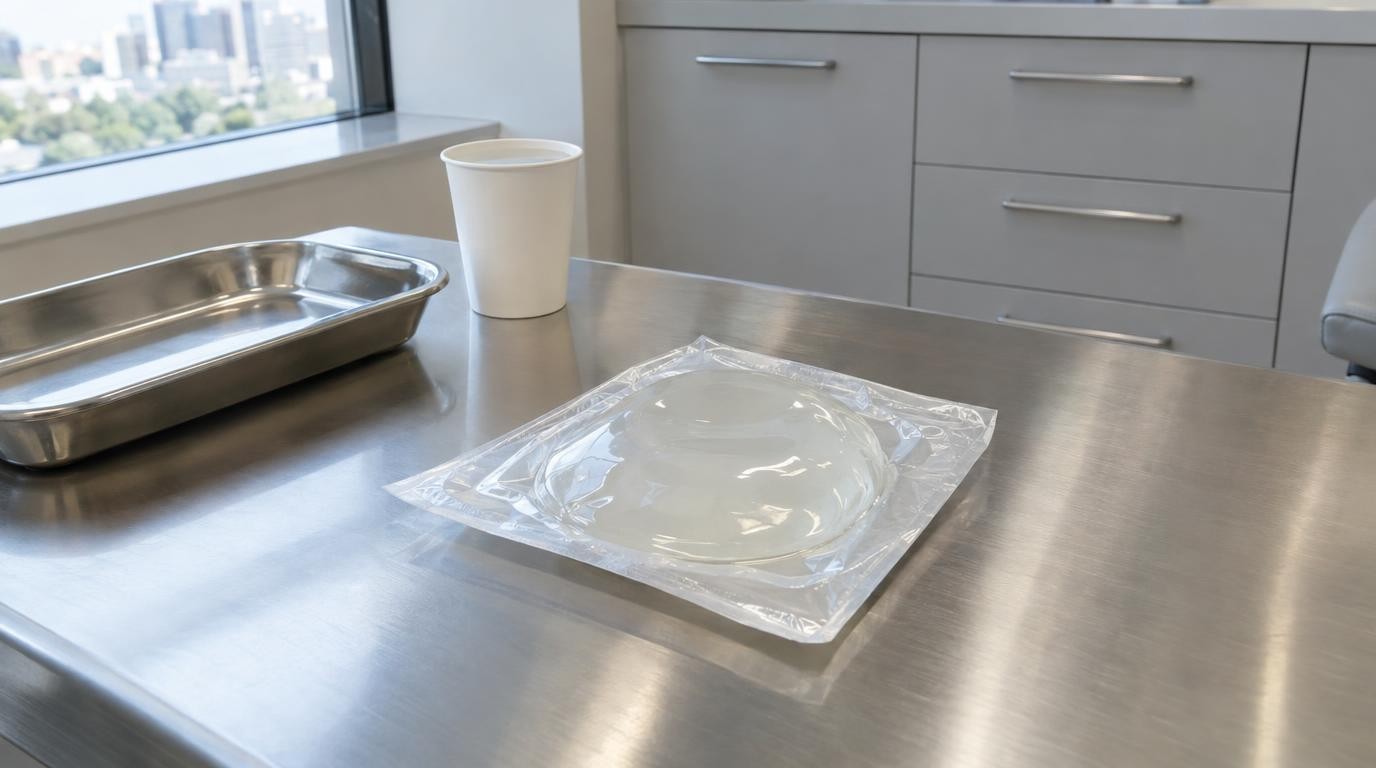
Saline breast implants hold sterile saltwater inside a silicone shell. They are usually inserted empty and filled after placement, allowing the surgeon to adjust filling during the procedure.
What are silicone and gummy bear implants made of?
Silicone breast implants contain gel within a silicone shell. Form-stable implants, often called “gummy bear” implants, contain a more cohesive gel that helps them retain their shape. As the American Society of Plastic Surgeons’ implant guide explains, gummy bear implants are a type of silicone-gel implant, not a separate filling category.
Which type of breast implant feels the most natural?
Silicone gel generally feels more like breast tissue than saline, but implant filling alone does not determine a natural-looking result. Existing breast tissue, implant size, placement, and profile all affect what a person sees and feels. Saline may feel firmer, and rippling of either implant can become more apparent when tissue coverage is limited.
How can tissue coverage affect implant feel and rippling?
Breast tissue helps cover an implant’s edges and folds. Someone with less coverage may be more likely to see or feel rippling, particularly with saline, although silicone does not eliminate that possibility. A 2020 prospective study of 223 women undergoing subpectoral breast augmentation detected ripples on ultrasound in 24% of the saline group and 27% of the silicone-gel group, a difference that was not statistically significant. Ripples were more common in participants with lower body mass indexes.
How do implant placement and profile affect appearance?
At CosmetiCare, subglandular placement positions the implant over the chest muscle and may suit someone with enough breast tissue for coverage. Partially submuscular placement puts the implant partly behind the muscle and may help when tissue coverage is limited. We also discuss low, moderate, and high profiles: low has the least projection, moderate adds volume with less projection than high, and high has the most projection. The combination should fit the person’s anatomy and goals rather than rely on material alone.
How does rupture monitoring differ for saline and silicone implants?
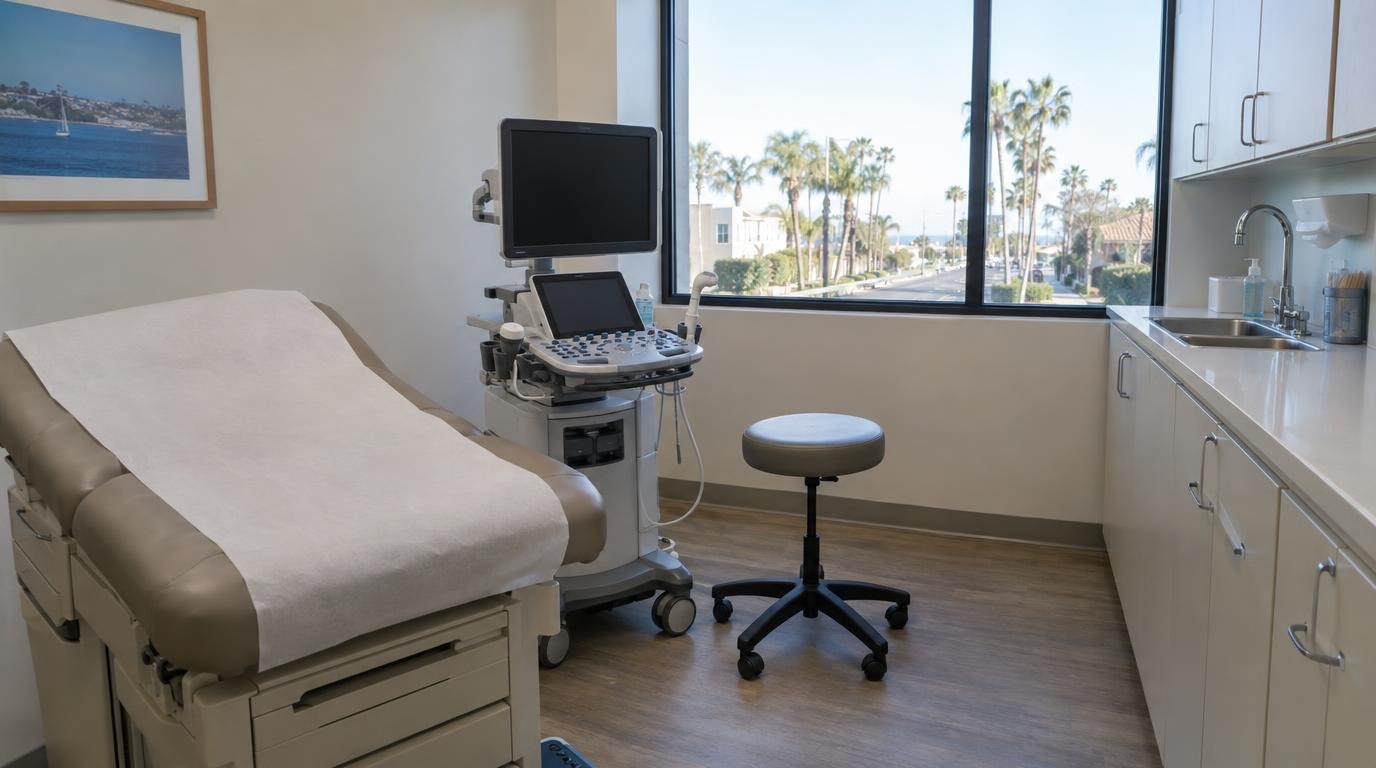
Saline rupture usually causes noticeable deflation, while silicone-gel rupture can occur without a visible change. Both implant types need ordinary clinical follow-up, and a suspected rupture needs assessment. Routine rupture imaging is not recommended for asymptomatic saline implants; silicone implants require an ultrasound or MRI screening plan because an examination alone may miss a silent rupture.
How often should silicone implants be checked with ultrasound or MRI?
An article on the American Society of Plastic Surgeons’ website quotes plastic surgeon Anna Steve, MD, recommending that silicone-implant rupture monitoring begin at the five-year mark and repeat every two to three years afterward. Ultrasound or MRI can assess implant condition even when there are no symptoms.
What happens if a saline or silicone implant ruptures?
When a saline shell leaks, the implant collapses and the body absorbs the saltwater. Silicone gel may remain inside the shell or move into the surrounding implant pocket, so a ruptured silicone implant may keep its shape. A new change in size, shape, firmness, swelling, or pain calls for assessment. A confirmed rupture may lead to surgery to remove or replace the implant.
What lasts longer, silicone or saline implants?
A surgeon quoted in an American Society of Plastic Surgeons article on implant choices reports that silicone implants last longer than saline implants. That observation cannot predict how long an individual implant will last: neither type has a guaranteed lifespan or a fixed replacement date. Implant condition, complications, changes in the breasts, and personal goals determine whether another operation makes sense. At CosmetiCare, we use 10–15 years as a typical lifespan estimate, not as a deadline for replacing an implant that has no identified problem.
Do breast implants need replacing every 10 years?
No. An implant does not automatically need replacement because a calendar date arrives. Monitoring becomes increasingly important as implants age, however, because rupture and other complications can develop over time. Changes after weight loss may also affect appearance without meaning that an implant has failed; our guide to how losing weight can affect breast implants explores that distinction.
How do the procedure and recovery differ between saline and silicone implants?
Both procedures involve creating a pocket and placing an implant. The filling can influence incision choice, but recovery depends more on the surgical plan and individual healing than on filling alone. Either way, plan for help at home and a period of reduced activity.
Can saline implants use a smaller incision?
Yes. Saline implants are usually inserted empty and filled in place, so they may pass through a smaller opening than prefilled silicone implants. At CosmetiCare, incision options include the breast crease, edge of the areola, armpit, and navel; the navel approach uses an unfilled implant.
How long does breast augmentation recovery take?
At CosmetiCare, soreness, swelling, and bruising generally peak in the first few days and then gradually ease; we advise postponing strenuous exercise for 4–6 weeks. Arrange a ride home and someone to stay with you for the first 24 hours. We recommend gentle walking and avoiding intimacy for around two weeks, and we suggest sleeping on your back for six weeks to protect the implants. Follow the instructions provided for your particular operation rather than assuming saline or silicone filling sets the recovery timetable.
What are the potential risks associated with breast implants?
Neither filling is risk-free. Breast augmentation can involve anesthesia risks, bleeding, infection, capsular contracture, rippling, implant rupture, changes in sensation, and additional surgery. Systemic symptoms reported as breast implant illness and rare implant-associated cancers are separate concerns.
The American Society of Plastic Surgeons’ safety information lists pain, poor scarring, fluid collection, implant position problems, and rare implant-associated cancers, including BIA-ALCL and breast implant-associated squamous cell carcinoma (BIA-SCC), among possible complications. Capsular contracture means scar tissue tightens around an implant; the American Board of Cosmetic Surgery’s guide to breast augmentation complications estimates that it occurs in about 10% of patients. Treatment depends on symptoms and severity, as our guide to capsular contracture surgery options explains.
How common is breast implant illness?
Its frequency has not been established. Breast implant illness refers to reported symptoms such as fatigue, joint pain, and difficulty concentrating in people with either filling type. Cleveland Clinic’s breast implant illness overview explains that there is no official diagnostic test and that other possible causes need evaluation.
Breast implant illness is not the same as an implant-associated cancer. The FDA’s breast implant safety information identifies breast implant-associated anaplastic large cell lymphoma, or BIA-ALCL, as a rare cancer that develops more frequently with textured than smooth-surfaced implants. The potential risks of an implant’s surface are therefore worth discussing separately from its saline or silicone filling.
Who should postpone or avoid breast augmentation?
If you have an active infection or are pregnant or breastfeeding, postpone breast augmentation. If you smoke or are not in good health, discuss whether you need to wait before surgery. CosmetiCare’s ideal candidates are healthy nonsmokers with realistic expectations who can follow their provider’s instructions. At your consultation, we review your medical history, health, and goals before proceeding.
Discuss personal risks with your own clinician before treatment. After surgery, seek urgent medical care for chest pain or difficulty breathing; promptly report fever, spreading redness, marked swelling, or a sudden breast change to the surgical team.
What should you discuss at a breast augmentation consultation in Newport Beach?
At CosmetiCare in Newport Beach, we assess breast tissue coverage and asymmetry, then review implant type, profile, incision, placement, and long-term follow-up. Virtual simulation can help you explore appearance goals before surgery.
How can a surgeon help match an implant to your anatomy?
A physical evaluation helps determine how much tissue covers the proposed implant and whether existing asymmetry affects the plan. If lost volume is accompanied by significant sagging, it may also help to discuss breast augmentation with a lift rather than expecting an implant alone to address every concern.
What follow-up plan should you agree on before surgery?
Keep a record of your implant type, surgery date, clinical follow-up visits, and any silicone-implant ultrasound or MRI results. A new change in breast size, shape, firmness, swelling, or pain calls for assessment even between scheduled visits.
Frequently Asked Questions
Are structured saline implants different from regular saline implants?
Yes. Structured saline implants have an internal structure intended to make the saltwater-filled implant feel more natural. They are still saline implants, not silicone-gel implants.
Are smooth and textured implants the same as saline and silicone implants?
No. Smooth or textured describes the implant’s outer shell, while saline or silicone describes its filling. Textured implants are designed to adhere more firmly to surrounding tissue.
Do gummy bear implants feel firmer than other silicone implants?
They can. Gummy bear implants contain a thicker, more cohesive silicone gel that helps them maintain their shape but can make them feel firmer than traditional silicone-gel implants, according to an article on the American Society of Plastic Surgeons’ website.
Can breast implants help correct uneven breast sizes?
Yes. Breast augmentation can improve some differences in breast size, though it may not make both breasts identical. At CosmetiCare, saline implants can be filled to different volumes during surgery to address asymmetry. We assess your existing breast shape and tissue before recommending implant sizes, placement, or other ways to improve balance.
Can I breastfeed after getting saline or silicone implants?
Many people with breast implants can still breastfeed, but the outcome depends partly on the surgical technique and individual anatomy. If you hope to breastfeed, tell us before surgery. We can plan the incision and surgical technique with breastfeeding in mind, but neither saline nor silicone filling alone guarantees breastfeeding ability.
Will breast implants change nipple sensitivity?
They may. Nipple sensation can decrease temporarily after breast augmentation, and some people experience numbness. This is a surgical consideration rather than a simple saline-versus-silicone choice.
Can I still get mammograms with breast implants?
Yes. Breast implants do not replace or eliminate routine breast-cancer screening. Tell the mammography facility that you have implants before your appointment. Placing an implant partially behind the chest muscle usually makes mammograms easier to perform. Implant rupture checks are a separate follow-up need.
How can you decide which implant type fits your priorities?
The better choice is the implant whose tradeoffs fit your anatomy and priorities, not a universally superior filling. Weigh silicone’s generally softer feel against saline’s usually noticeable deflation, then consider rippling, imaging commitments, and the recommended incision and placement. A clear follow-up plan matters whichever filling you choose.
If your main concern is sagging rather than added volume, a breast lift without an implant may be an option; a lift does not add implant volume. For appropriately selected patients who want a modest increase in volume without implants, fat grafting may be another option. Ask our team whether breast fat grafting is available and appropriate for you.
If you are comparing saline and silicone breast implants, contact CosmetiCare for a personalized breast augmentation consultation in Newport Beach. Our team can help you evaluate how each option fits your goals and what care you would need after surgery.
This information is general and is not medical advice. Talk to a licensed clinician about your own situation before making a treatment decision.
