
Last updated: October 25, 2026
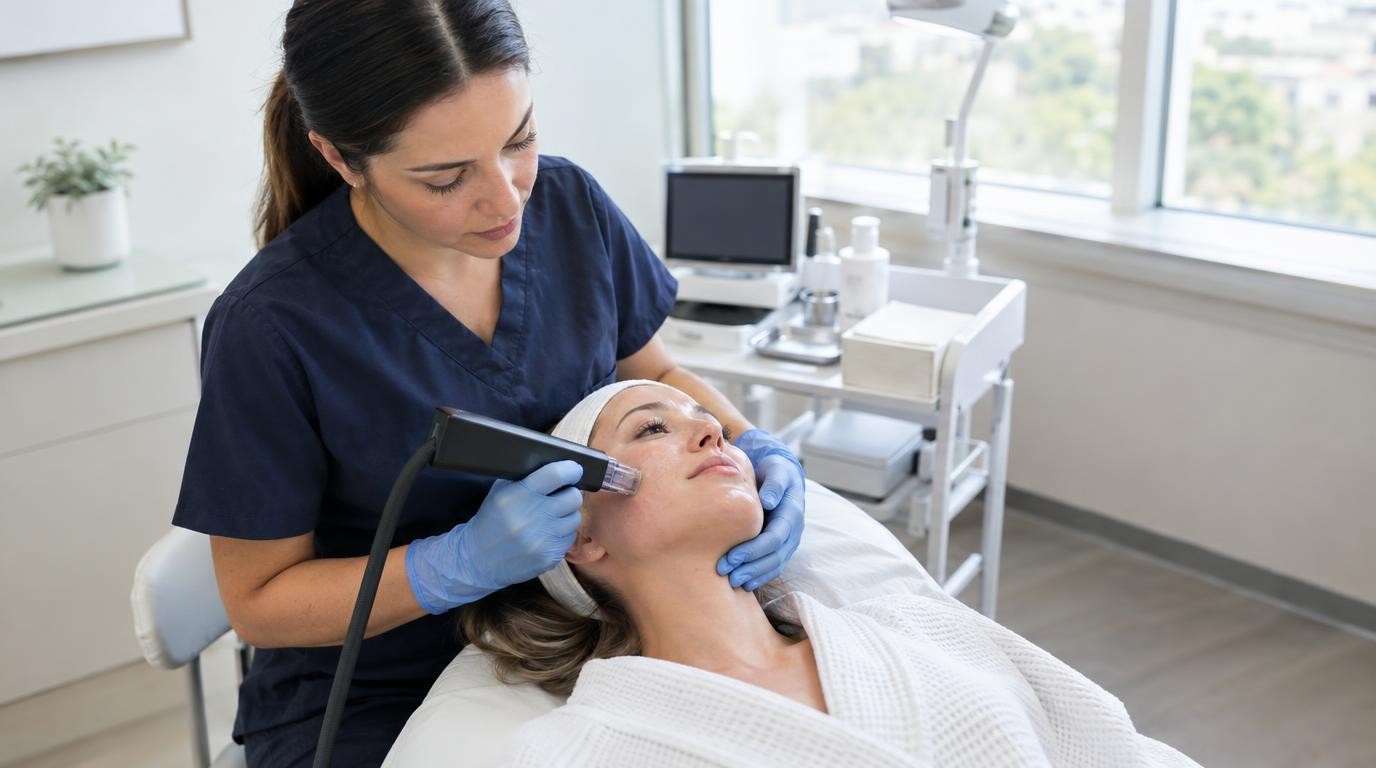
Morpheus8 is InMode’s fractional radiofrequency (RF) microneedling device: needles enter the skin while the device delivers controlled RF energy. It is used to improve concerns such as uneven texture and mild skin laxity, but it is not a laser, an injected filler, or a substitute for surgery.
What Is Morpheus8?
Morpheus8 combines microneedles with fractional radiofrequency energy to treat skin texture and mild laxity. At CosmetiCare, we offer Morpheus8 RF microneedling for concerns including wrinkles and acne scarring. The treatment encourages tissue remodeling rather than adding facial volume or removing excess skin.
RF energy heats tissue beneath the skin’s surface, prompting a healing response that can gradually improve its appearance. The FDA clearance for the InMode System with Morpheus8 Applicators identifies use in dermatologic procedures where soft-tissue coagulation or contraction, or control of bleeding, is needed. Specific cosmetic outcomes such as reducing scars or stretch marks or removing fat are not listed as cleared indications; using the device to target those outcomes is off-label.
Is Morpheus8 a laser, filler, or peel?
No. Lasers use light energy, fillers add material beneath the skin, and peels treat the skin with a chemical solution. Morpheus8 uses needles to place RF energy in tissue. Those differences help explain why a person seeking smoother skin may consider RF microneedling, while someone seeking restored facial volume may need a different approach.
How Does Morpheus8 RF Microneedling Work?
Morpheus8 places microneedles in the treatment area and delivers controlled RF heat through them. Needle placement and energy settings are selected for the area and the person’s skin. The resulting healing response can support collagen remodeling over time, which is why changes in texture and firmness generally develop gradually.
A review in Aesthetic Surgery Journal Open Forum explains that adding RF to microneedling increases dermal heating and enhances the skin’s wound-healing response. Collagen and elastin remodeling are part of that response. More heat or deeper placement is not automatically better; the goal is to treat the appropriate tissue while protecting surrounding structures.
How deep do Morpheus8 needles go?
Depth varies with the applicator, treatment area, and clinical plan, so there is no single needle depth for every Morpheus8 appointment. The review in Aesthetic Surgery Journal Open Forum recommends 1.0 mm for the cheek region and 1.5 mm for the neck in RF microneedling; these are the review’s recommendations, not preset Morpheus8 settings. A device’s maximum depth is not necessarily the depth used for your treatment.
Is Morpheus 8 the Same as Microneedling?
Morpheus8 is a form of microneedling, but it is not the same as microneedling without RF. Both approaches create microscopic needle channels; Morpheus8 also delivers RF energy to heat tissue. That added energy may suit some mild-tightening goals, while the better choice depends on the concern and treatment area.
Our guide to microneedling in Newport Beach explains the needle-based approach in more detail.
Is there anything better than Morpheus8?
There is no universal winner. These options address different concerns:
| Option | Concern it may address | Important distinction |
|---|---|---|
| Morpheus8 | Texture and mild skin laxity | Does not restore lost volume or remove excess skin |
| Microneedling without RF | Some texture concerns | Does not deliver RF heat |
| A skin-resurfacing treatment | Surface concerns | Does not remove excess skin |
| Filler | Lost facial volume | Does not remove excess skin |
| Facelift | Marked sagging and excess skin | Is surgery, unlike RF microneedling |
What Skin Concerns and Areas Can Morpheus8 Treat?
Morpheus8 may improve uneven texture, fine lines, wrinkles, acne scarring, and mild skin laxity on suitable areas of the face or body. At CosmetiCare, the lower face and neck are common treatment areas. Other areas can be assessed for concerns such as discoloration and stretch marks, with results depending on the concern.
Mild looseness around the jawline may look firmer after treatment, but improvement in jowls varies. Substantial drooping or fullness beneath the chin should not be assumed to respond like surface texture. In clinical practice, distinguishing loose skin from lost volume or underlying fullness helps set a useful treatment goal.
Can Morpheus8 help with acne scars and stretch marks?
We offer Morpheus8 for concerns including facial acne scars and stretch marks. Remodeling may soften their appearance, but it cannot be expected to erase every scar or mark. Scar characteristics, skin response, and the area treated all affect what degree of change is realistic.
Who Might Be a Good Candidate for Morpheus8?
A potential Morpheus8 candidate is an adult seeking minimally invasive improvement in texture, scarring, or mild laxity who can accommodate temporary visible skin changes. We use Morpheus8 across skin types, but candidacy is individual. Skin tone, health history, treatment settings, and the possibility of pigment change all matter to the assessment.
At energy levels greater than 62 mJ/pin, FDA clearance limits use of the Morpheus8 Applicator to Skin Types I-IV. Suitability across skin types therefore does not mean every setting suits every person.
What Happens During a Morpheus8 Appointment?
We assess your treatment goals and select settings, use the handpiece to place needles and deliver RF energy, then give you aftercare instructions.
- We review your treatment goal and area and select device settings.
- During treatment, the handpiece places needles in the skin and delivers RF energy.
- Afterward, we provide aftercare instructions suited to the treated area and your skin’s response.
How many Morpheus8 treatments might I need?
At CosmetiCare, our estimate is one to three treatments, depending on the severity of the concern. That is an estimate, not a fixed course or a guarantee of improvement.
How Long Is Morpheus8 Recovery, and When Do Results Appear?
Visible microlesions can last a few days and slight redness up to a week. You may see early changes within days, while benefits can continue to appear for up to three months:
| What to expect | CosmetiCare’s timeline |
|---|---|
| Visible microlesions | A few days |
| Slight redness | Up to one week |
| Initial visible changes | Within days for some patients |
| More noticeable changes | Over about three weeks |
| Benefits that continue to emerge | Up to three months |

These are estimates, not deadlines for healing or results. Three months describes how long benefits may continue to develop, not how long they last; we cannot give an evidence-backed duration for the improvement. The treatment area, settings, and individual response can change both recovery and the degree of improvement.
How should I care for my skin after Morpheus8?
We recommend moisturizing the treatment area and avoiding direct sun exposure. Follow the personalized instructions provided after your appointment, including any guidance specific to the area treated.
What Are the Downsides of Morpheus8, and Who Should Avoid It?
Temporary redness and visible microlesions are expected short-term effects. Burns, pigment changes, infection, scarring, and unwanted fat loss are possible complications, not routine parts of recovery; we cannot give a reliable frequency for any of them.
An FDA adverse-event report involving Morpheus8 describes unwanted facial fat loss. Such a report cannot establish how often an outcome occurs or, by itself, prove its cause.
What risks should I discuss before Morpheus8?
Before treatment, tell us about an active infection at the treatment site, impaired healing, pregnancy, an implanted electronic device, a history of pigment changes or scarring, or concerns about preserving facial volume. Postpone this elective treatment during pregnancy or until an infection at the site clears. If you have a pacemaker or another implanted electronic device, your clinician should check device-specific RF guidance and obtain appropriate medical clearance before treatment. Impaired healing and a history of pigment changes or scarring call for individual assessment, not automatic exclusion. Ask us about the proposed needle depth and energy settings, including how the higher-energy Skin Types I–IV restriction noted above applies to you.
Seek prompt medical assessment for worsening pain, spreading redness, fever, significant blistering, or other symptoms that seem more severe than the aftercare guidance describes.
Frequently Asked Questions
Is Morpheus8 FDA approved or FDA cleared?
Morpheus8 has FDA 510(k) clearance, not FDA approval: the FDA’s 510(k) decision found it substantially equivalent to a marketed device for its cleared uses. The current clearance covers dermatologic procedures needing soft-tissue coagulation or contraction or control of bleeding; it does not establish fat removal as a cleared use or guarantee a cosmetic result.
Does Morpheus8 require surgical incisions or stitches?
No. The handpiece makes small needle punctures rather than surgical incisions, so the treatment does not ordinarily require stitches.
Are different Morpheus8 needle depths used on different parts of the face?
Yes. Needle depth should account for differences in skin thickness across treatment areas. The review in Aesthetic Surgery Journal Open Forum recommends 0.5 mm for skin around the mouth and 1.5 mm for the forehead and temples. Those are RF microneedling review recommendations, not settings that automatically suit every Morpheus8 patient.
What is the difference between Morpheus8 and Morpheus8 Body?
The applicators use different compatible treatment tips. The FDA device description identifies a 40-pin tip for the Morpheus8 Body Applicator and 12-pin, 24-pin, and T tips for the Morpheus8 Applicator. The appropriate applicator and settings depend on the area and treatment goal.
Are Morpheus8 treatment tips reused between patients?
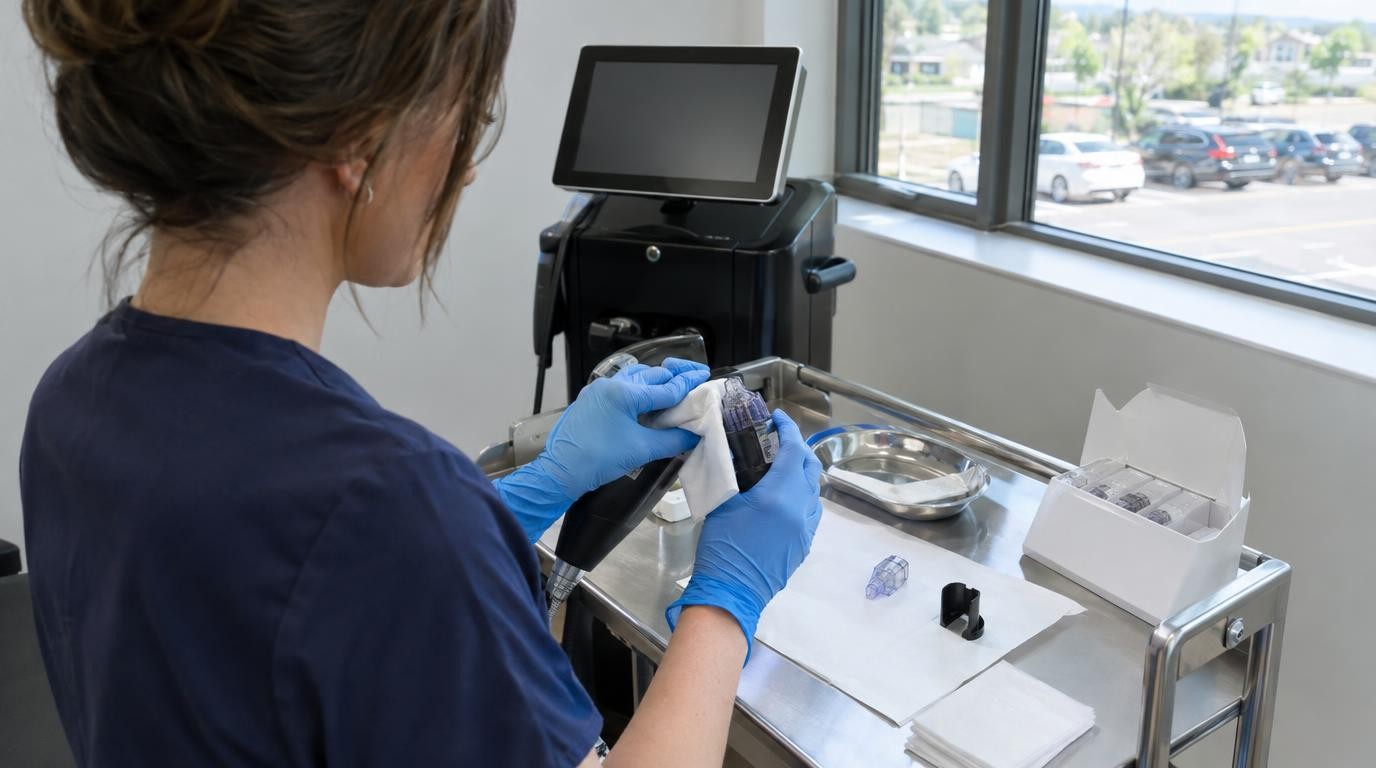
No. The FDA device description identifies the Morpheus8 applicator tips as sterilized, disposable, single-use accessories. The handpiece connects to the device console, while its treatment tip is intended for one use.
Can Morpheus8 be used to reduce fat under the chin?
Some clinicians may use deeper RF microneedling settings under the chin with care to achieve some fat reduction, according to the review in Aesthetic Surgery Journal Open Forum. Fat reduction is not a Morpheus8 FDA-cleared indication, and the result is not guaranteed. Fullness beneath the chin and loose skin are different concerns and may require different approaches.
Is Morpheus8 Right for Your Skin Goals?
Morpheus8 may be worth considering when the goal is smoother texture or modest improvement in mild laxity, rather than major lifting or restored volume. A sound decision matches the concern and treatment area to realistic results, allows for recovery, and weighs the risks against other approaches that may better address the underlying concern.
If you are considering Morpheus8, contact CosmetiCare in Newport Beach, California, for a consultation. Our team can assess your skin goals, explain the likely recovery, and help you decide whether Morpheus8 or another treatment is the better fit.
This information is general and is not medical advice. Talk to a licensed clinician about your own situation before making a treatment decision.
