
Last updated: October 23, 2026
Breast augmentation with lift typically uses implants to add volume and a lift to remove excess skin, reshape breast tissue, and raise breast position. If you want both more fullness and a higher breast position, the procedures may be performed together or planned as separate operations, depending on your anatomy and goals.
What is breast augmentation with lift, and what does it change?
Augmentation mastopexy combines added volume, typically from implants, with a lift that reshapes and raises existing breast tissue and repositions the nipple and areola as needed. Pregnancy, breastfeeding, weight loss, and aging can contribute to lost volume or changes in breast position; augmentation and lifting address those changes in different ways.
We frequently combine breast augmentation with a breast lift. The American Society of Plastic Surgeons’ breast augmentation guidance explains that augmentation does not correct severely drooping breasts; a lift may be needed to achieve a fuller, lifted appearance.
What are the key differences between a breast lift and breast implants?
Implants primarily change breast size and fullness. Fat transfer is another way to add breast volume, although it is not the implant-based augmentation with lift described here. A lift primarily changes breast shape and position by working with existing tissue and removing excess skin. If your current size feels right but you want a higher position, a lift without implants may be worth discussing. Our guide to breast lift without augmentation explores that distinction.
How to tighten breast skin?
When excess breast skin contributes to sagging, a surgical lift removes that skin and reshapes the underlying breast. The American Society of Plastic Surgeons’ breast lift procedure guide explains that the surgeon lifts and reshapes breast tissue, repositions the nipple and areola as appropriate, removes excess skin, and closes the incisions. An implant adds volume; it should not be relied on to tighten loose skin in place of those steps.
Can a breast lift and implants be done in one surgery?
For an appropriately selected patient, we can place implants and perform a breast lift in one operation. The amount of excess skin, nipple position, and desired implant size help shape that plan.
A 2014 retrospective augmentation-mastopexy series by Stevens and colleagues reviewed records from one outpatient surgery center and reported these study characteristics:
| Measure | Finding in the Stevens series |
|---|---|
| Combined procedures | 1,192 |
| Patients | 615 |
| Level of evidence | 4 |
The authors concluded that a combined procedure can be safe and effective with a skilled surgeon and proper patient selection. Because the series was observational, it does not establish that one-stage surgery is safest or suitable for every patient.
When might a surgeon recommend two separate operations instead?
A surgeon may recommend separate operations when the proposed implant size and lift are difficult to balance for a patient’s skin, breast tissue, and desired shape. One-stage surgery involves one planned surgical date and initial recovery; staging involves another operation and recovery. An examination is needed to determine whether staging would offer a more appropriate plan and how the operations would be timed.
Implants add volume while a lift changes the tissue envelope and breast position. When those changes place competing demands on the tissues, doing less in each operation may be worth considering. The American Society of Plastic Surgeons notes that lifting can often be performed with augmentation but may require a separate operation. The Stevens series supports the availability of a one-stage approach, not a rule that one stage is always preferable.
Who may be a candidate for breast augmentation with lift?
A candidate may want both added breast volume and correction of sagging, be in good health, and have realistic expectations. At CosmetiCare, a private consultation includes discussing concerns and goals, a physical evaluation, and a review of medical records. That assessment helps distinguish a combined procedure from implants alone, a lift alone, or a staged plan.
For breast augmentation at CosmetiCare, the minimum ages for these implant options are:
| CosmetiCare implant option | Minimum age in our augmentation guidance |
|---|---|
| Saline | 18 |
| Silicone | 22 |
We also ask patients not to smoke and to follow surgical instructions before and after surgery. Breast shape, the amount of excess skin, existing implants, and plans for future breastfeeding can affect the choice of implant, incision, and lift technique. An incision and technique may support breastfeeding goals, but breastfeeding after surgery cannot be guaranteed.
How is breast augmentation with lift performed?
In a combined operation, the surgeon creates pockets and places implants to add volume, then lifts and reshapes breast tissue, repositions the nipple and areola as needed, and removes excess skin. The sequence can vary, but the surgical plan includes these steps:
- The surgeon makes incisions and creates a pocket for each implant.
- Implants are placed to add volume.
- Breast tissue is lifted and reshaped, the nipple and areola are repositioned as needed, and excess skin is removed before the incisions are closed.
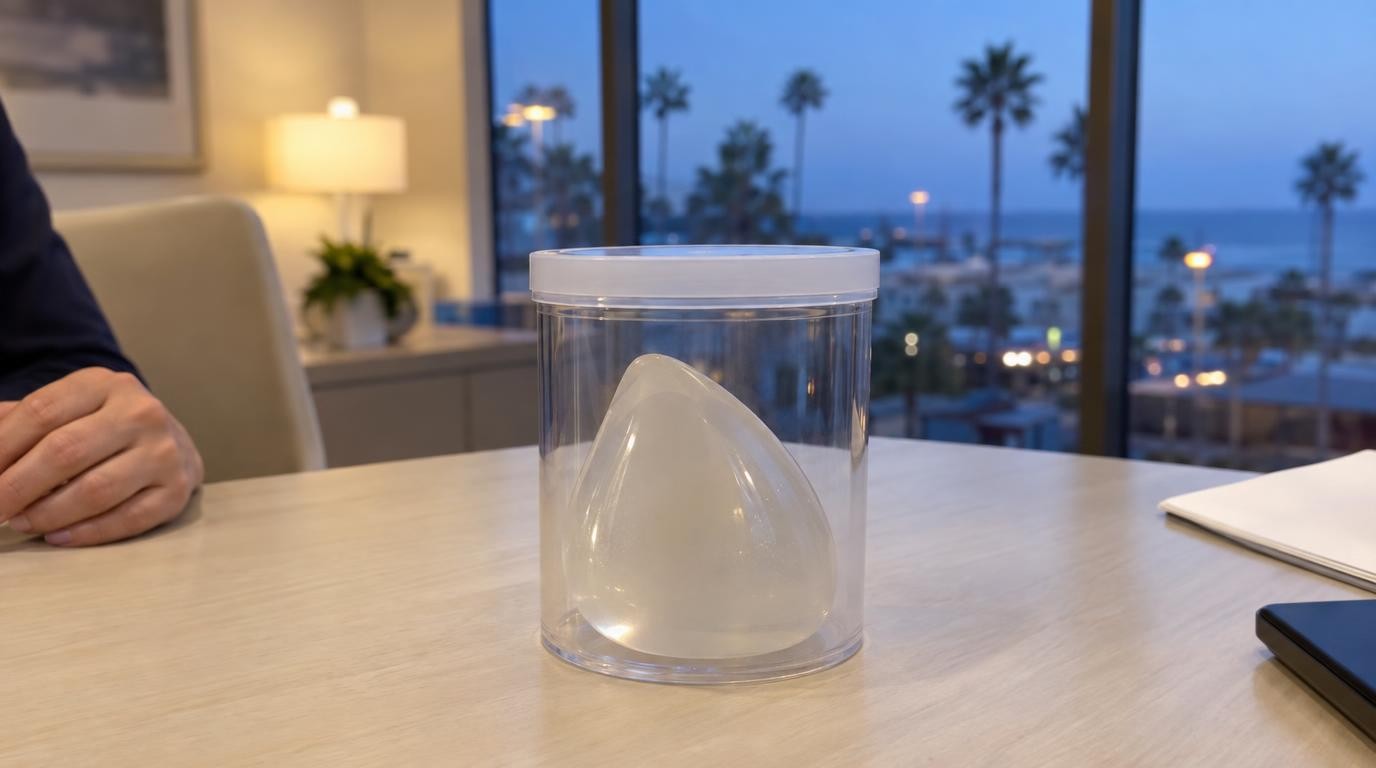
The surgeon may change the sequence and tailor the incisions and reshaping to your anatomy. Implant selection and placement must work with the planned lift rather than being chosen independently of it.
Lift incisions may be around the areola, extend vertically toward the breast crease, or also follow the crease. The appropriate pattern depends on breast shape, nipple position, skin quality, and the amount of excess skin.
How do saline and silicone implants affect the surgical plan?
We offer saline implants filled with sterile saltwater and silicone implants filled with gel. Saline implants can be inserted unfilled, which can allow a smaller access incision; silicone implants are inserted filled. If a saline implant ruptures, the body absorbs the saltwater. A silicone implant rupture can be harder to detect, so silicone implants call for regular breast screenings. For more detail, compare saline vs silicone breast implants by feel and recommended follow-up.
Where can the implants be placed?
Our augmentation options include subglandular placement, above the chest muscle, and partially submuscular placement, behind part of that muscle. Existing breast tissue and the desired contour help guide the choice. With a lift, the surgeon must also account for how implant placement will interact with reshaped breast tissue and the planned incisions.
What is recovery like after a breast lift with implants?
Recovery after a breast lift with implants begins with rest, support for the breasts, and help at home. After augmentation at CosmetiCare, your chest is wrapped in a compression garment, and you need someone to drive you home and stay with you for the first 24 hours.

After augmentation, soreness, swelling, and bruising are generally most noticeable in the first few days and then subside. We advise avoiding intimacy for around 2 weeks, postponing strenuous exercise for 4–6 weeks, and sleeping on your back for 6 weeks after augmentation. For a breast lift on its own, the American Board of Cosmetic Surgery’s breast lift guide estimates a return to work in 1–2 weeks and full recovery in 4–6 weeks. Neither set of timelines guarantees your recovery after a lift with implants; your surgeon will individualize instructions for incision care, work, and activity.
What results and scars should you expect?
Implants can add fullness, while a lift can change breast shape and raise breast and nipple position. Early swelling can obscure the eventual contour. Results differ with anatomy and healing, and implants are not lifetime devices. Changes in breast tissue or an implant may mean additional surgery is needed later.
Lift incision lines are permanent, although they generally fade and may become less noticeable over time. Their location and extent depend on the lift and implant-access plan; some scars can be concealed in natural breast contours, but they will not be invisible. Our guide to breast lift scarring and care offers more detail. Our breast augmentation gallery shows actual patient outcomes, but another patient’s starting shape, surgical plan, and result may differ from yours.
What are the risks, and who should avoid the procedure?
Breast augmentation with lift carries surgical risks, including bleeding, infection, wound-healing problems, and anesthesia complications. Implant-specific concerns include capsular contracture, rupture, and possible revision surgery. Breast implant-associated anaplastic large cell lymphoma (BIA-ALCL) is rare and occurs more often with textured implants; rare cases of squamous cell carcinoma in the tissue around implants have also been reported. Some patients report systemic symptoms, such as fatigue and joint pain, that they attribute to implants, although the cause remains uncertain. Nipple sensation may change, and future breastfeeding is uncertain. Someone in poor health, who currently smokes, or whose tissues and goals make the combination unsuitable may be advised to defer or change the plan.
The Stevens retrospective series reported the following outcomes among its combined-procedure patients. These are findings from that series, not predictions of an individual patient’s risk:
| Outcome | Finding in the Stevens series |
|---|---|
| Poor scarring | 5.7% |
| Wound-healing problems | 2.9% |
| Saline implant deflation | 2.4% |
| Patients who elected revision surgery | 104 of 615 patients (16.9%) |
| Reasons for revision procedures in this retrospective series | 54 implant-related; 50 tissue-related |
Contact the surgical team promptly for fever, spreading redness, sudden breast swelling, or worsening pain; seek emergency care for trouble breathing or other severe symptoms. Discuss your personal risks and whether a lift alone, a staged approach, or deferring surgery makes more sense with your own clinician.
Frequently Asked Questions
Can a doughnut breast lift correct significant sagging?
No. A doughnut lift uses an incision around the areola to provide a small lift without substantial breast reshaping, according to Cleveland Clinic. Greater sagging may call for a vertical or anchor incision; the pattern depends on nipple position, skin quality, and excess skin.
How long does it take for breasts to settle after a lift?
Cleveland Clinic says breast shape and position continue to settle over a few months, even though lift results are visible immediately. Swelling and healing can make the early appearance different from the eventual contour.
Can a breast lift make enlarged areolas smaller?
Yes, a breast lift can reduce enlarged areolas when appropriate. During the procedure, the surgeon may remove skin around their perimeter while repositioning the nipple and areola.
Can a breast lift with implants correct uneven breasts?
A breast lift with implants may improve asymmetry, but it cannot guarantee identical breasts. Lift techniques can reshape and reposition existing tissue, while implants add volume. At CosmetiCare, we offer saline implants that can be filled to different volumes when that helps address a size difference.
Can breasts sag again after a breast lift with implants?
Yes. Aging, pregnancy, breastfeeding, and weight fluctuations can affect breast shape after surgery. A systematic review of lifts without implants identifies recurrence of sagging as a concern, although it did not study lifts with implants. Implants do not prevent later sagging.
How long do breast implants last after a breast lift?
Breast implants do not have a guaranteed lifespan. At CosmetiCare, we estimate that implants typically last 10-15 years, though individual longevity varies. Having a lift at the same time does not eliminate the possibility of later implant replacement or other surgery.
Does having a breast lift and implants together increase the chance of another surgery?
An American Society of Plastic Surgeons summary of an observational study reports that reoperations did not appear more frequent after combined surgery than after the procedures performed separately. That comparison cannot predict your individual chance of needing another operation.
How can Laguna Beach patients plan a consultation at CosmetiCare?
Start by identifying whether you want more volume, a higher breast position, or both. A consultation can then assess whether one-stage surgery, staged surgery, or a different approach fits your anatomy and goals. For patients in Laguna Beach, California, CosmetiCare is located in Newport Beach, California.
Bring questions about implant type and placement, lift incisions and scars, recovery support, follow-up, and your individual risks. Contact us to arrange a private consultation and develop a surgical plan based on your examination and priorities.
This information is general and is not medical advice. Talk to a licensed clinician about your own situation before making a treatment decision.
