
Last updated: November 11, 2026
Lipo 360 is liposuction planned to contour the front, sides, and back of the midsection rather than an isolated pocket of fat. The term describes a treatment pattern, not a special machine. At CosmetiCare, we tailor liposuction in Newport Beach, CA to your anatomy and goals.
What is lipo 360?
The name “360” refers to planning the contour across adjoining parts of the torso, not to removing equal amounts of fat from every side. Different liposuction techniques can be used within that plan.
Cleveland Clinic’s explanation of Lipo 360 notes that the term has no official definition but generally refers to treating the front, sides, and back.
Which areas does lipo 360 treat?
Lipo 360 generally targets fat across the abdomen, waist, flanks or love handles, and back. Depending on your anatomy, back treatment may focus on upper-back, lower-back, or bra-line fullness. Circumferential planning does not mean every patient needs fat removed from every torso area.
The goal is to assess how neighboring areas look together. For example, treating the waist without considering fullness along the lower back may leave a transition that does not match the patient’s contour goals. Readers concerned about upper-back fullness can also explore our guide to back fat and bra bulge removal.
Does lipo 360 include the arms, thighs, or buttocks?
No. Lipo 360 refers to a torso-focused plan, not liposuction of the entire body. An article on the American Society of Plastic Surgeons’ website specifically distinguishes circumferential torso treatment from treatment of the arms and thighs. The arms, thighs, or buttocks may be considered separately, based on the patient’s goals and surgical assessment.
How much fat can be removed with lipo 360?
There is no universal amount of fat that should be removed. An article on the American Society of Plastic Surgeons’ website explains that the amount varies with the patient’s health and surgical goals. Another article on the society’s website reports an ASPS recommendation of no more than five liters of total lipoaspirate—fat plus fluid—in one procedure; that does not mean five liters of fat. A safe plan prioritizes proportion and overall health rather than promising a particular volume or change on the scale.
How is lipo 360 planned and performed with liposuction?
A circumferential plan considers how adjoining torso areas meet. The term lipo 360 does not determine the precise areas treated, liposuction technique, or anesthesia.
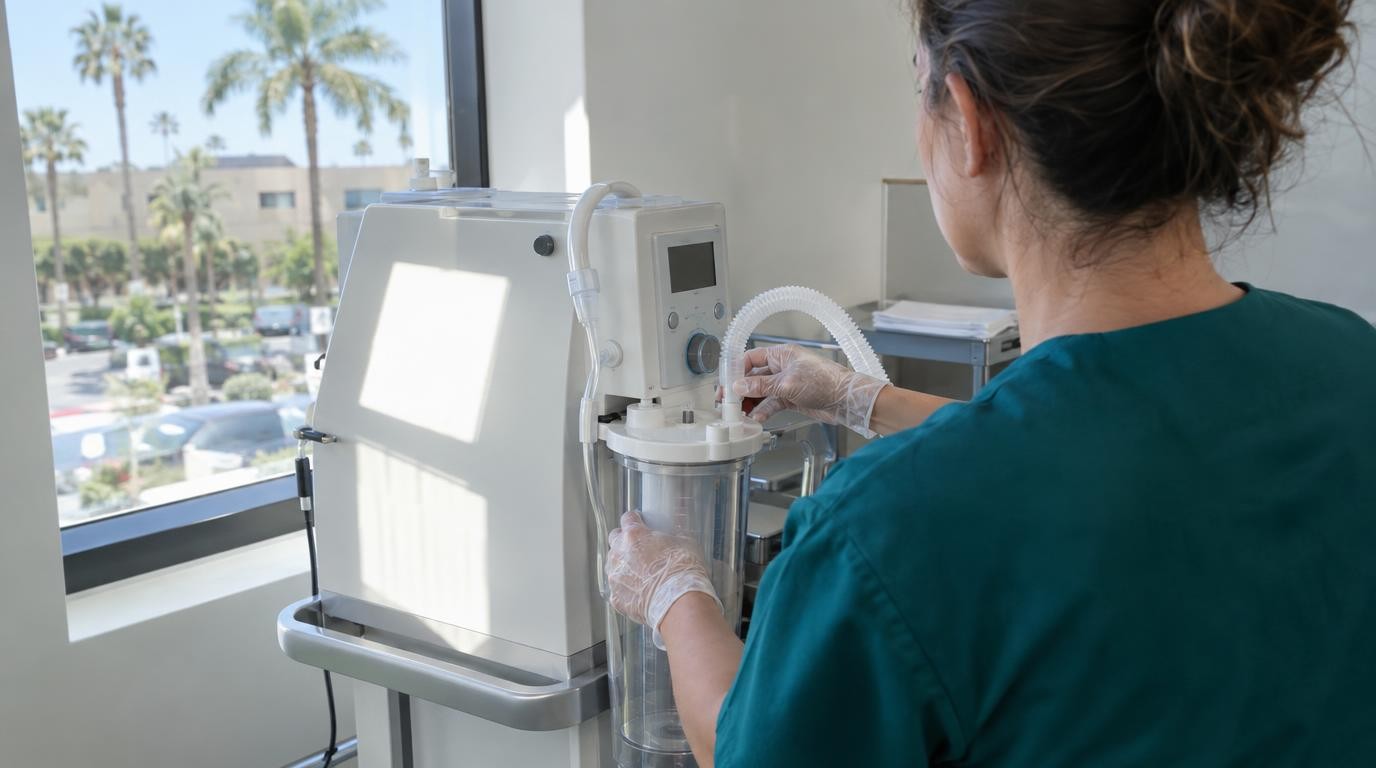
A surgeon may plan torso-focused liposuction in these steps:
- Assess the contour. A surgeon may evaluate the abdomen, waist, flanks, and back together to identify which areas, if any, would benefit from treatment.
- Choose the approach. Depending on the patient’s needs, a surgeon may use tumescent liposuction, which involves an injected solution typically containing saline, epinephrine, and lidocaine; ultrasound-assisted liposuction, which uses sound energy to break up fat; or power-assisted liposuction, which uses a vibrating handpiece. The anesthesia plan is individualized.
- Remove targeted fat. The surgeon uses small incisions and a slender cannula to suction fat from the agreed-upon areas.
At CosmetiCare, we offer individualized liposuction consultations to discuss your goals, which fat deposits to treat, the available approaches, and anesthesia. A patient seeking waist liposuction may need a different plan from someone whose principal concern is back fat removal.
Who is a good candidate for lipo 360?
A good candidate for torso liposuction is generally healthy, has localized fat that persists despite diet and exercise, and wants contour improvement rather than substantial weight loss. Good skin elasticity helps the skin adapt after fat removal. Medical history, skin quality, weight stability, and realistic goals all matter more than interest in a particular treatment name.
We generally recommend being within 10 to 15 pounds of your goal weight before liposuction; that guideline alone does not establish surgical eligibility. The American Society of Plastic Surgeons’ liposuction guidance emphasizes that liposuction is not a treatment for obesity and that skin with poor elasticity may not reshape as well.
What is lipo 360 recovery like?
Lipo 360 recovery commonly involves soreness, bruising, and swelling, with the pace of healing influenced by the areas treated and the individual patient. We provide a compression garment, aftercare instructions, and prescribed pain medication after liposuction.
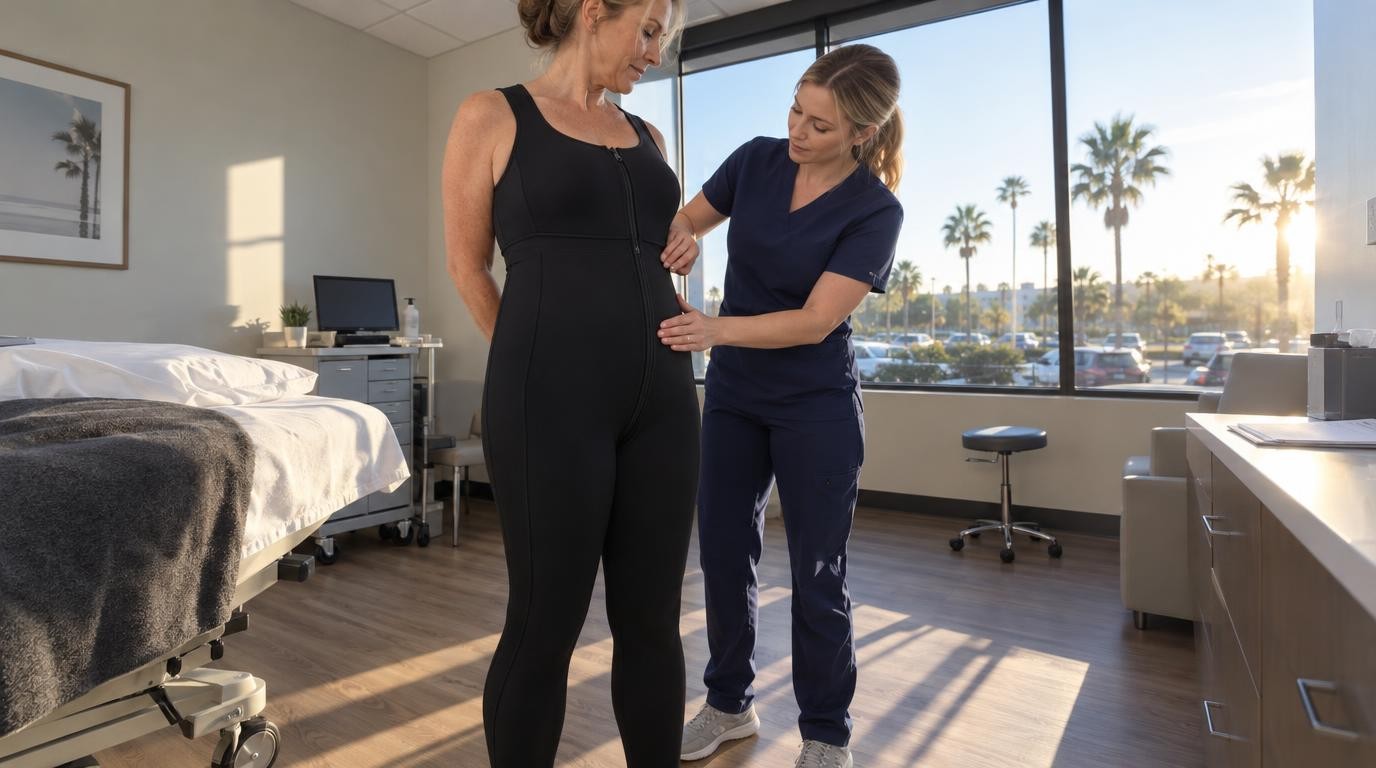
For our liposuction patients, these are general recovery milestones, not promises for an individual circumferential plan:
| Recovery milestone | CosmetiCare’s general guidance |
|---|---|
| Light activity | Often possible within a few days |
| Suture removal | Within 7 days |
| More involved activity, including exercise | May resume after 2 to 3 weeks when cleared |
The American Society of Plastic Surgeons’ liposuction guide says patients can return to work in a few days after most procedures. A physically demanding job, treatment of multiple areas, or your individual surgical plan may require more time. Cleveland Clinic’s liposuction overview advises allowing four to six weeks for the body to recover. That overall recovery window is different from the longer wait for swelling to subside and final results to emerge.
Is lipo 360 painful?
Anesthesia is used to prevent pain during liposuction, but you may have pain, tenderness, or soreness afterward. Cleveland Clinic notes that this discomfort can last a couple of days; medication may help manage it, and a compression garment may help reduce swelling.
When will you see lipo 360 results, and how long can they last?
A change in torso contour may be visible early, but swelling can conceal the eventual shape. In our liposuction patients, swelling generally improves substantially after six weeks and continues to subside over the following six months; healing can continue for up to a year. Results can last when weight remains stable, although future weight gain can change treated and untreated areas.
Liposuction removes targeted fat cells permanently. Remaining fat cells can still enlarge, and new fat cells may develop with weight gain, so removal does not make an area immune to future change. At CosmetiCare, we recommend healthy eating and exercise after surgical clearance to help preserve the contour.
What are the risks of lipo 360, and who should avoid it?
Lipo 360 carries the risks of liposuction, including swelling, bruising, soreness, small incision scars, and possible uneven contours. Less common but potentially serious complications include infection, fluid buildup, blood clots, and anesthesia-related problems. People in poor health, those seeking major weight loss, and those mainly concerned with loose skin may need a different plan.
Risk depends on the patient’s health and the extent of surgery. A published case series titled A New Surgical Approach to Body Contouring reported outcomes in 188 cases combining circumferential liposuction with abdominoplasty. Its complication figures describe that combined operation, not the expected complication rate for liposuction alone:
| Finding in the combined-surgery series | Reported result |
|---|---|
| Fluid buildup, or seroma | 18 cases (9.6%) |
| Collection of blood, or hematoma | 1 case (0.5%) |
Tell your own clinician about your medical history and discuss your personal surgical and anesthesia risks before deciding on treatment. After surgery, seek urgent medical care for chest pain, trouble breathing, or new swelling in one leg; contact your surgical team promptly for fever, worsening redness, or pain that is increasing rather than improving.
How is lipo 360 different from a tummy tuck or liposculpture?
The procedures address different problems:
Is a 360 tummy tuck the same as lipo 360?
No. A tummy tuck, or abdominoplasty, removes excess abdominal skin; lipo 360 refers to fat removal planned around the torso. The American Society of Plastic Surgeons’ explanation of abdominoplasty also notes that a tummy tuck can address weakened muscles. We offer tummy tuck and liposuction procedures, which can be combined when appropriate. Patients considering skin removal may find our guide to recovering from a tummy tuck helpful.
Is liposculpture better than liposuction?
Not inherently. Clinicians sometimes use the names interchangeably: the American Society of Plastic Surgeons also calls liposuction “liposculpture.” Cleveland Clinic describes liposculpture as typically defining smaller areas, usually with local anesthesia and a quicker recovery than liposuction. Liposuction may remove larger amounts of fat and sometimes uses general anesthesia. These are tendencies, not guarantees; your anatomy, skin elasticity, and surgical plan matter more than the name.
Frequently Asked Questions
How long do I need to wear a compression garment after lipo 360?
According to MedlinePlus, you will likely need to wear a compression garment for several weeks; the exact duration depends on your procedure and your surgeon’s instructions. Compression helps reduce swelling and supports the skin as it adapts to its new contour. We provide a garment and an individualized aftercare plan.
Can I go home the same day after lipo 360?
Often, yes: an article on the American Society of Plastic Surgeons’ website describes liposuction as typically outpatient surgery. The areas treated, anesthesia, your health, and any additional procedures can affect whether you go home the same day. Arrange transportation and any help you may need at home.
Will lipo 360 get rid of cellulite?
No, lipo 360 is not an effective treatment for cellulite. It removes localized fat around the midsection but does not reliably correct the skin dimpling that defines cellulite.
Do I need to stop smoking before lipo 360?
Yes, plan to stop smoking and using nicotine before lipo 360 and during recovery, following your surgeon’s specific instructions. Nicotine can impair healing and increase complication risks. An article on the American Society of Plastic Surgeons’ website advises avoiding tobacco and nicotine for several weeks before and after liposuction. Tell us about all nicotine products you use.
Can fat removed during lipo 360 be transferred to my buttocks?
Yes. Fat removed by liposuction can sometimes be used for a separately planned buttock fat transfer, but the transfer is not automatically part of lipo 360. We offer fat transfer and Brazilian butt lift procedures; preserving fat and adding a transfer would be separate parts of the surgical plan.
Is numbness normal after lipo 360?
Temporary numbness or tingling can occur after liposuction and, according to MedlinePlus, may last for weeks as the treated areas heal.
Is there a nonsurgical version of lipo 360?
No, lipo 360 is a surgical liposuction plan, not a nonsurgical treatment. Options such as CoolSculpting reduce fat without liposuction, but they work differently and may be better suited to smaller, specific areas. CoolSculpting uses controlled cooling to destroy fat cells in selected areas rather than removing them by suction.
How can you decide whether lipo 360 is right for you?
To weigh your options, consider whether localized fat or loose skin is your main concern, how many torso areas you want treated, and how much recovery time you can accommodate.
If you are coming from Costa Mesa, we welcome you to our Newport Beach clinic for a consultation about the areas you want to change and whether torso-focused liposuction or another approach fits your goals.
This information is general and is not medical advice. Talk to a licensed clinician about your own situation before making a treatment decision.
