
Last updated: November 13, 2026
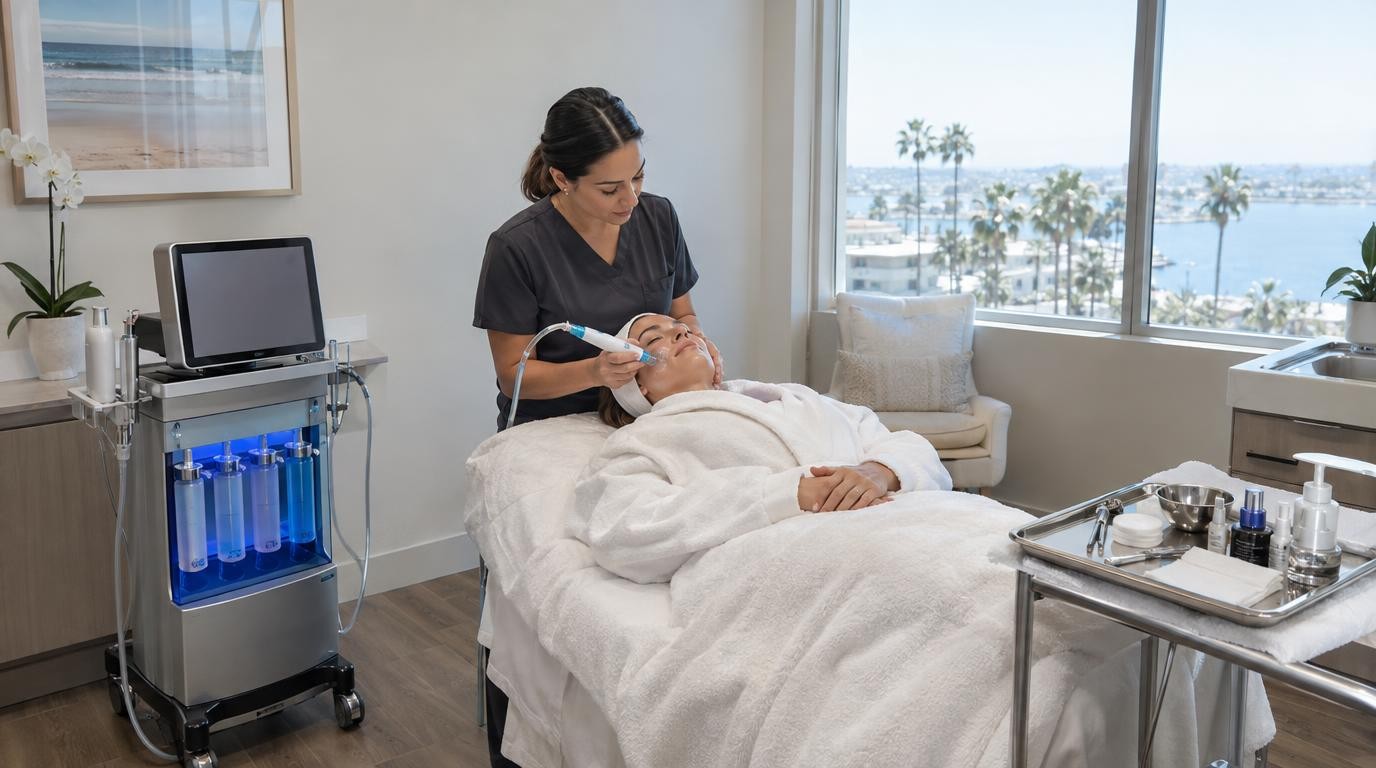
DiamondGlow uses a diamond-tipped wand for mechanical exfoliation, pore extraction, and serum infusion; HydraFacial uses a Vortex tip, a gentle chemical peel, suction extraction, and hydration. Choosing between DiamondGlow and HydraFacial comes down to your skin goals and how your skin responds to exfoliation. At CosmetiCare in Newport Beach, California, we offer HydraFacial Platinum.
What Is the Difference Between DiamondGlow and HydraFacial?
DiamondGlow emphasizes diamond-tipped mechanical exfoliation, while HydraFacial combines Vortex-tip exfoliation with a gentle chemical peel. Both treatments extract pore debris and infuse serums. The main distinction is how the skin is exfoliated; the wand design alone does not establish a difference in treatment depth.
Cleveland Clinic’s patient overview of Dermalinfusion, medically reviewed July 29, 2022, identifies DiamondGlow as a form of Dermalinfusion performed with a diamond-tipped wand. An article about facials on Cleveland Clinic’s website distinguishes DiamondGlow’s mechanical exfoliation from the chemical peel used in a HydraFacial.
The methods are easier to compare side by side:
| Feature | DiamondGlow | HydraFacial |
|---|---|---|
| Exfoliation | Diamond-tipped wand mechanically removes surface dead skin cells. | Vortex tip exfoliates, followed by a gentle chemical peel. |
| Pore cleansing | Extraction removes debris as the wand treats the skin. | Suction extracts debris and impurities. |
| Serum delivery | The wand infuses a selected serum while exfoliating and extracting. | After extraction, our HydraFacial Platinum infuses a customized serum containing hydrating ingredients, antioxidants, peptides, and collagen. |
What Is a DiamondGlow Face Treatment?
A DiamondGlow facial is a Dermalinfusion treatment that exfoliates with a diamond-tipped wand, cleans pores, and applies a serum selected for the skin. Its physical resurfacing may appeal to someone focused on rough texture or uneven tone.
Which Is Better, HydraFacial or Microdermabrasion?
Neither HydraFacial nor microdermabrasion is automatically better: HydraFacial combines exfoliation with a peel, extraction, and hydration, while standalone microdermabrasion primarily removes surface dead skin cells. DiamondGlow is a specialized form of microdermabrasion that adds pore extraction and serum infusion, so it should not be treated as interchangeable with a basic microdermabrasion appointment. Learn more about microdermabrasion and skin renewal when weighing mechanical exfoliation.
Which Facial Better Matches Dry Skin, Rough Texture, or Clogged Pores?
Dryness or dullness may make hydration a priority; rough texture or uneven tone calls for a closer look at how your skin tolerates exfoliation. Both facials include extraction for pore congestion. We describe our HydraFacial Platinum as suitable for all skin types. DiamondGlow has tips with different abrasion levels and adjustable suction, and Cleveland Clinic notes that Dermalinfusion can be used on sensitive skin. We still assess your current skin condition before recommending either treatment.
For oily skin, visible pores, and occasional breakouts, cleansing and extraction can improve the skin’s appearance without curing acne or permanently changing pore size. A 12-week, open-label study of HydraFacial Clarifying treatments enrolled 20 adults with mild-to-moderate acne and planned six treatments, one every two weeks. The Clarifying protocol included cleansing and peeling, suction extraction, and blue LED light, and the study reported improvements in skin appearance. Because that protocol differs from our HydraFacial Platinum treatment, the study cannot establish the same acne results for our patients. Facials may soften the appearance of fine lines through smoother, hydrated skin; they should not be expected to erase established acne scars.
Our guide to HydraFacial for clearer pores and hydrated skin explains those goals in more detail.
Which Is Better Than HydraFacial?
DiamondGlow may be a better fit if you prefer diamond-tip mechanical resurfacing, while HydraFacial may be a better fit if you prioritize its gentle peel and hydration. Neither has been shown to deliver better results for everyone. The DiamondGlow patient brochure specifies SkinMedica Pro-Infusion Serums for DiamondGlow; our HydraFacial Platinum treatment uses a booster selected for your skin.
How Does CosmetiCare Customize a HydraFacial Platinum Treatment?
At our Newport Beach practice, our aesthetician assesses your skin and selects a HydraFacial Platinum booster and treatment plan to suit your needs.
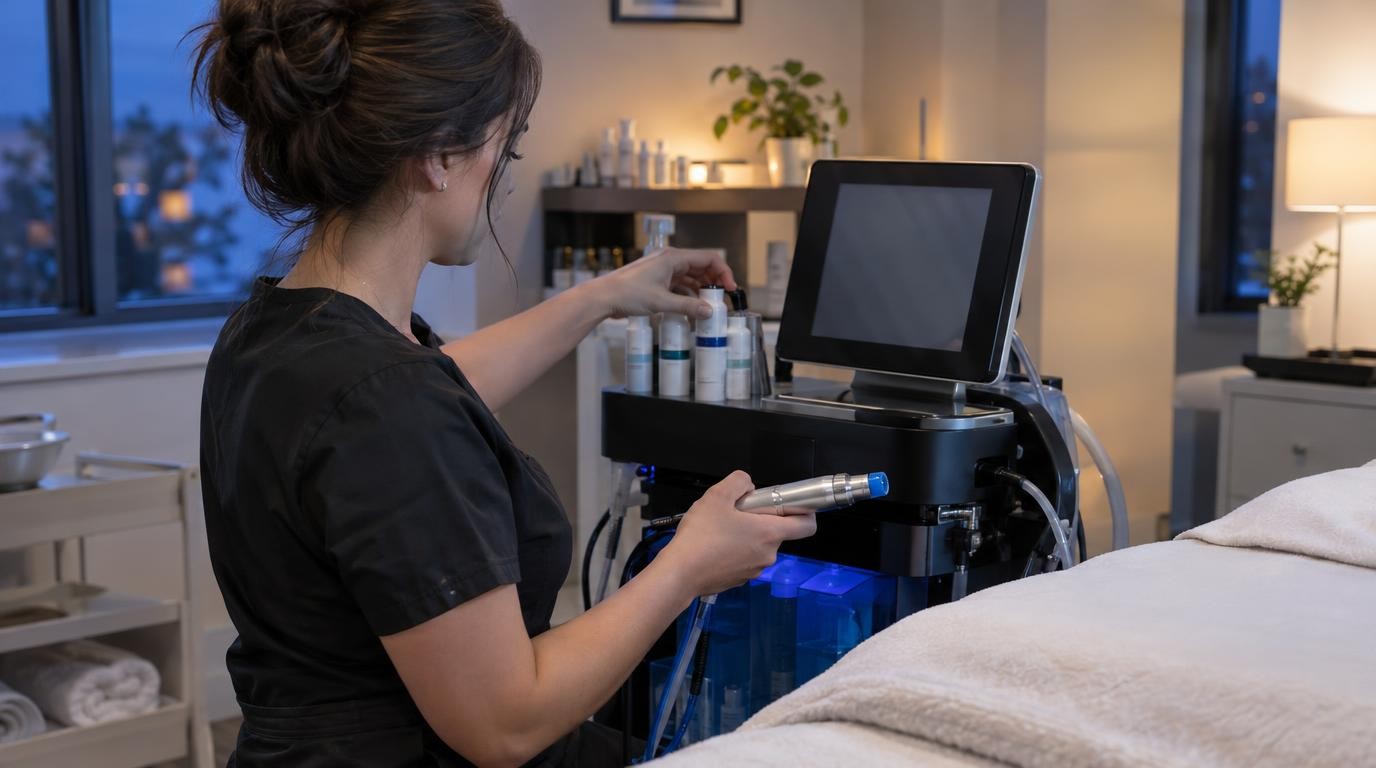
Our HydraFacial Platinum treatment takes one hour and follows these steps:
- Cleanse and exfoliate: The Vortex Exfoliation tip lifts surface debris and dead skin cells.
- Apply a gentle chemical peel: This step adds exfoliation and helps address pore congestion.
- Extract and hydrate: Vacuum-like suction removes impurities before a targeted serum is applied.
- Customize the treatment: Our service includes dermaplaning, and our aesthetician selects a booster based on the patient’s skin.
Our listed booster options are Glysal Peel, Dermabuilder, CTGF, and Britenol. Booster selection is individualized rather than a promise that every option suits every patient.
What Does a HydraFacial Feel Like, and Is There Downtime?
Our HydraFacial Platinum is generally tolerable and not painful, though you may feel slight pressure or tingling during extraction and serum application. The treatment involves no downtime.

DiamondGlow also generally involves no downtime: Cleveland Clinic says patients can resume work and usual activities after Dermalinfusion, although brief redness or swelling may occur. For either treatment, “no downtime” does not rule out temporary sensitivity; your experience may vary with your skin and the steps selected.
How Long Do HydraFacial Results Last?
At CosmetiCare, a smoother, more hydrated appearance may last up to seven days after an initial HydraFacial Platinum treatment. We recommend one HydraFacial Platinum treatment once a month for patients pursuing ongoing skin-care goals. For DiamondGlow, Cleveland Clinic describes a possible immediate improvement in tone and fullness, but the effects are temporary; it does not give a universal number of days they last.
A fresh glow and smoother-feeling skin are more realistic expectations than permanent changes to pores, fine lines, or breakouts. How skin looks afterward can also reflect its starting condition and everyday skin care.
What Are the Risks, and Who Should Postpone an Exfoliating Facial?
Exfoliation and extraction can cause temporary redness, dryness, or irritation even when no extended recovery is planned. The DiamondGlow patient brochure advises against treatment when skin quality is compromised; postpone an exfoliating facial if your skin is sunburned, broken, infected, or significantly irritated. Tell the treating clinician about recent peels, exfoliants, and prescription skin products before deciding whether either treatment is appropriate.
For Dermalinfusion, Cleveland Clinic notes that minor redness and swelling usually resolve within 48 hours. Uncommon complications can include blisters, skin damage or scars, cold sores, infection, minor bruising, skin discoloration, or sensitivity. These are DiamondGlow-related risks, not complication rates for our HydraFacial Platinum. Call your healthcare provider if you develop an itchy rash, fever, or bruising, redness, or swelling that lasts more than a week. Seek prompt medical evaluation if fever comes with worsening or spreading redness, warmth, or pain. Call 911 if you have difficulty breathing or throat swelling.
Frequently Asked Questions
What is the difference between a carbon laser facial and a HydraFacial?
A carbon laser facial uses a carbon-based lotion and laser energy, while a HydraFacial uses a Vortex tip, a gentle chemical peel, suction extraction, and hydrating serum. Neither is the same as DiamondGlow’s diamond-tipped exfoliation.
Can I wear makeup after a DiamondGlow facial?
Yes, you can generally wear makeup after a DiamondGlow facial without waiting. Cleveland Clinic’s Dermalinfusion guidance says patients can resume usual activities and start wearing makeup after treatment. If your skin feels irritated or your provider gives different aftercare instructions, follow that individualized advice instead.
When can I use retinoids or exfoliating acids after DiamondGlow?
Wait three to five days before using retinoids or alpha hydroxy acids after DiamondGlow, according to Cleveland Clinic’s Dermalinfusion aftercare guidance.
Do I need sunscreen after a DiamondGlow facial?
Yes. Cleveland Clinic recommends wearing sunscreen outdoors and minimizing sun exposure for at least two weeks after DiamondGlow. Freshly exfoliated skin may be more sensitive.
How often should I get a DiamondGlow facial?
DiamondGlow frequency depends on your skin and treatment goals. Cleveland Clinic notes that some patients need three to six Dermalinfusion treatments spaced two to four weeks apart, and a provider may recommend monthly visits.
Can I get DiamondGlow while pregnant or breastfeeding?
Tell your provider if you are pregnant or breastfeeding before considering DiamondGlow. The DiamondGlow patient brochure instructs patients to disclose pregnancy or lactation, medical conditions, allergies, and topical medications; it does not establish that treatment is appropriate for everyone.
Can DiamondGlow be used around the lips and eyes?
DiamondGlow, also called Dermalinfusion, can be used around sensitive areas such as the lips and eyes, according to Cleveland Clinic. That does not mean every area or skin condition should be treated the same way.
How Can You Choose Your Next Facial in Newport Beach?
Before booking, consider your skin’s sensitivity to exfoliation and whether the treatment’s serum options suit your goals. We offer HydraFacial Platinum in Newport Beach, but DiamondGlow is not among our listed services. If you want DiamondGlow specifically, ask our team to verify availability rather than assuming it is part of HydraFacial Platinum.
A practical decision checklist is:
- Main goal: Is your priority hydration, smoother texture, or reducing the appearance of pore congestion?
- Skin condition: Is the skin comfortable enough for exfoliation, or should treatment wait?
- Preferred approach: Does a Vortex tip with a gentle peel or diamond-tipped mechanical exfoliation better match the goal?
- Expected result: Is a temporary improvement in glow and smoothness the result being sought?
We also list VI Peel and DSE Peel as possible complementary treatments when clinically appropriate; they are not equivalent to either facial. If you would like help assessing HydraFacial Platinum for your skin goals, contact CosmetiCare for a personalized consultation in Newport Beach, California.
This information is general and is not medical advice. Talk to a licensed clinician about your own situation before making a treatment decision.
