
Last updated: October 27, 2026
An endoscopic brow lift is a surgical forehead lift that uses a small viewing instrument through short scalp incisions to raise drooping brows. At CosmetiCare in Newport Beach, the goal is a more rested-looking brow and smoother forehead, with the technique and likely result tailored to your anatomy.
What Is an Endoscopic Brow Lift, and What Can It Change?
At CosmetiCare, the endoscopic approach uses three or more short scalp incisions to reposition a low brow. It can soften forehead lines, but it does not remove excess upper-eyelid skin and cannot correct that concern on its own.
How does an endoscope help lift drooping brows?
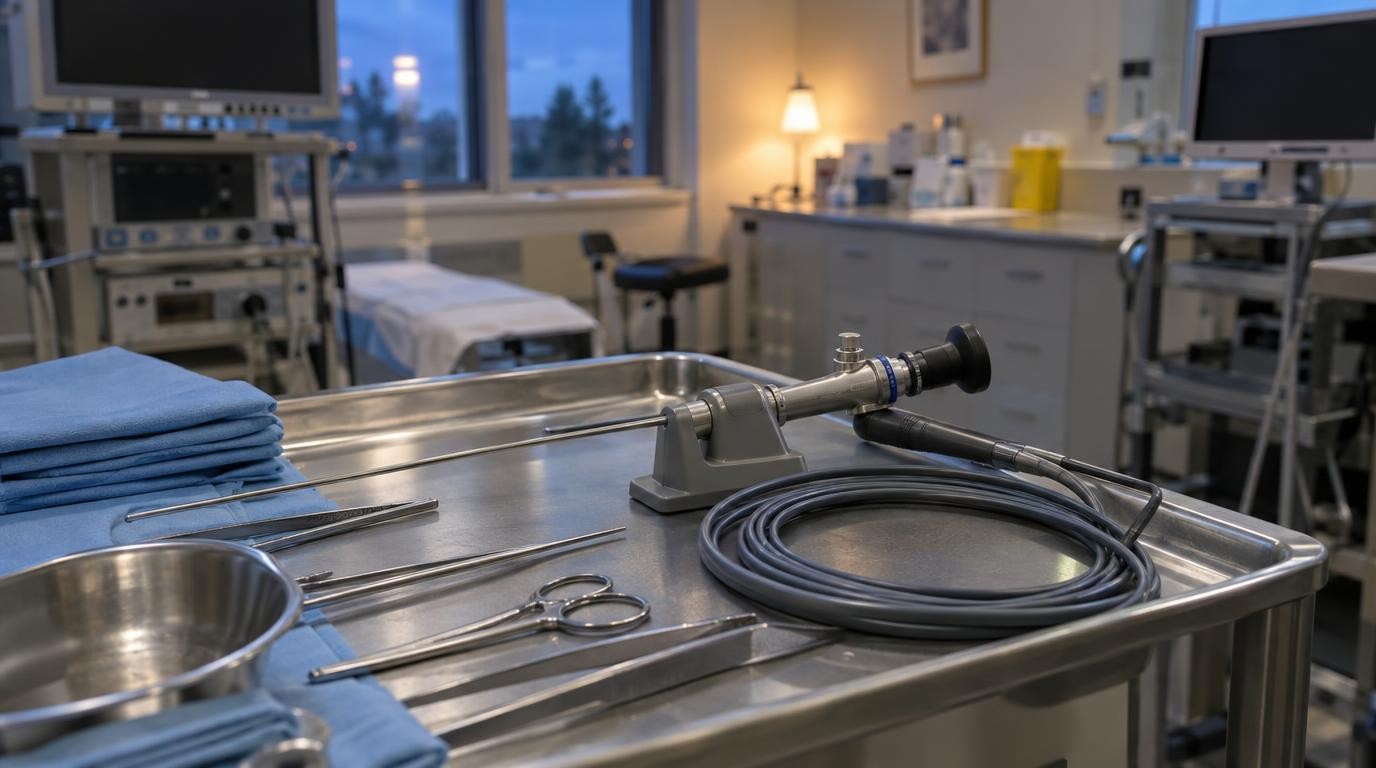
The endoscope displays images of tissues beneath the forehead, helping the surgeon lift and adjust them. During our brow lift procedure in Newport Beach, the surgeon uses that view to address brow droop and forehead lines. The incisions are placed in the scalp rather than across the visible forehead.
Can a brow lift improve forehead lines and a tired-looking brow?
Yes. Raising a low brow and addressing tissues behind forehead creases may create a smoother, more alert appearance, but it will not remove loose upper-eyelid skin. As the American Academy of Ophthalmology’s discussion of nonsurgical brow lifts explains, a chemical or injectable approach may offer a subtler, temporary change that requires repeat treatment rather than surgically repositioning a low brow.
Who Is a Good Candidate for an Endoscopic Brow Lift?
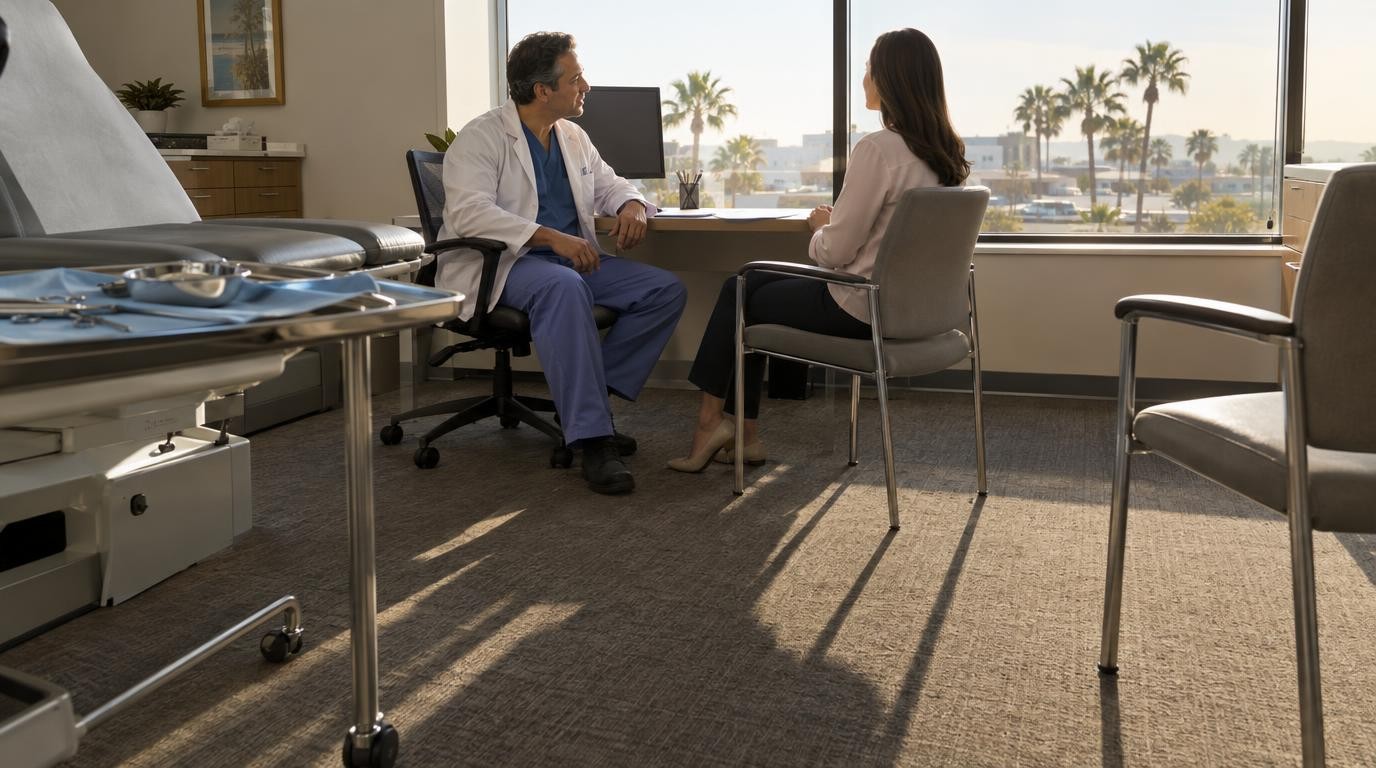
An adult with low-set brows, forehead creases or a brow position that creates an unwanted tired expression may be a candidate for a brow lift. At CosmetiCare, the decision depends on an in-person assessment of brow position, facial anatomy and personal goals. Being a candidate for a brow lift does not automatically mean the endoscopic technique is the best choice.
Can younger adults benefit from a brow lift?
Yes. At CosmetiCare, brow lifts are more commonly performed for people ages 40 to 60, but younger adults with furrows or frown lines associated with stress or sun exposure may also be candidates. Age alone does not determine whether surgery will address the concern a patient wants to change.
How does a surgeon decide whether your brows need lifting?
If a low brow contributes to the appearance of a drooping upper eyelid, eyelid surgery alone may not produce the result you expect. The surgeon assesses where the brows sit, where creases form, and what you hope to change. The American Academy of Facial Plastic and Reconstructive Surgery’s brow lift guidance also identifies facial structure, hairline, degree of brow drooping and personal goals as factors in technique selection.
What Does Brow Lift Surgery Entail?
At CosmetiCare, we perform brow lifts under general anesthesia. Unlike a conventional lift, an endoscopic lift does not remove forehead skin; it lifts and repositions the underlying tissues.
What happens during an endoscopic brow lift procedure?
- The surgeon makes short scalp incisions that provide access for the endoscope and surgical instruments.
- The endoscope displays the underlying forehead area so the surgeon can work with the tissues contributing to brow position and forehead lines.
- The surgeon releases and elevates the brow tissues and may adjust muscles that contribute to forehead lines, then closes the incisions.
Our conventional approach is different: it uses an incision across the top of the head, behind the hairline. The surgeon recommends an approach based on the change needed rather than assuming that shorter incisions suit everyone.
Can a brow lift be combined with eyelid or facial surgery?
Yes. At CosmetiCare, a brow lift may be combined with eyelid surgery, a facelift, mid-facelift or neck lift when the surgeon determines that a combined plan fits the patient’s goals and health.
How Long Does Endoscopic Brow Lift Recovery Take?
At CosmetiCare, we advise patients to expect early swelling, bruising and discomfort; swelling and bruising generally subside over two to three weeks. These are general brow lift guidelines, not a guaranteed endoscopic-only recovery schedule.
What happens during the first days after brow lift surgery?
Cold compresses and keeping your head elevated while resting can help reduce swelling; take any prescribed pain medication as directed. If head dressings or drains are used, we generally remove them after one or two days. Temporary numbness and itching may occur as nerves heal, and sutures or staples are usually removed within five days.
When can you return to work and strenuous exercise?
Plan for up to two weeks off work, even if you feel ready sooner. Avoid strenuous activity for the first four to six weeks and temporarily avoid direct sunlight, following the instructions you receive for your procedure. Bruising may improve enough for everyday activities before swelling has fully settled.
How Much Lift Can You Expect From an Endoscopic Brow Lift?
A 2025 systematic review and meta-analysis in Aesthetic Surgery Journal pooled findings from 12 studies and reported long-term elevation of 3.25 mm at the inner brow, 3.86 mm at the middle brow and 4.35 mm at the outer brow. These group averages cannot predict your result, and early swelling can change how the lift looks.
What did the long-term endoscopic brow lift meta-analysis measure?
The pooled estimates and their confidence intervals break down by brow zone as follows:
| Brow zone | Pooled elevation | Confidence interval |
|---|---|---|
| Medial – inner brow | 3.25 mm | 2.44-4.06 mm |
| Central – middle brow | 3.86 mm | 2.93-4.80 mm |
| Lateral – outer brow | 4.35 mm | 3.06-5.64 mm |
Those values describe pooled outcomes, not a promised amount of lift or a universal length of time that results will last. The review included both isolated and combined endoscopic brow lift surgeries.
Will an endoscopic brow lift stop future brow drooping?
No. A brow lift makes a lasting surgical change, but its visible effect can diminish as aging continues; we cannot promise that brow position will remain unchanged. At CosmetiCare, results often become more apparent about 12 to 14 days after surgery as swelling subsides, although healing continues beyond that early change.
How Does an Endoscopic Brow Lift Compare With Other Brow Lift Techniques?
An endoscopic lift uses short scalp incisions to access brow and forehead tissues, while a temporal lift uses incisions near the temples to focus on the outer brow. The approaches below also differ in where they place incisions:
| Technique | Incisions | Main consideration |
|---|---|---|
| Endoscopic | Three or more short incisions behind the hairline | Uses an endoscope to lift and reposition brow and forehead tissues |
| Conventional or coronal | A longer incision across the scalp behind the hairline | Provides more direct access to forehead tissues |
| Temporal | An incision near each temple | Primarily lifts the outer brow |
| Direct | An incision immediately above the eyebrow | Targets the brow directly but may leave a visible scar |
For selected patients with severe brow drooping who prioritize improvement in peripheral vision, a direct lift may be worth considering if they accept its visible scar, as EyeWiki’s endoscopic brow lift overview explains. The appropriate technique depends on brow position, hairline, anatomy and goals.
When might a conventional brow lift be considered instead?
A surgeon may consider the conventional approach when more direct access to forehead tissues better suits the planned correction. Our conventional technique may yield longer-lasting results than our endoscopic approach, although individual results vary. That possibility needs to be weighed against incision placement and the change you want, rather than assuming either method is preferable for every patient.
How long does it take to recover from a temporal brow lift?
Typical downtime after a temporal brow lift is one to two weeks as swelling and bruising subside, according to an American Society of Plastic Surgeons brow lift comparison. This approach primarily raises the outer brow; your recovery may differ.
What Are the Potential Complications Associated With Endoscopic Brow Lift Surgery?
Swelling, bruising and short-term discomfort are common early effects after surgery. Potential complications include bleeding, infection, anesthesia-related problems and, rarely, a blood clot that can travel to the lungs.
Which temporary effects and incision changes should you discuss?
Temporary numbness and itching may occur as nerves heal, but changes in sensation or itching can persist. Although scalp placement helps conceal incisions, a visible or unfavorable scar remains possible. The American Society of Plastic Surgeons’ brow lift safety guidance also lists poor wound healing, hair loss around incisions, facial asymmetry and facial nerve injury that could cause weakness or paralysis.
A raised hairline is possible, making your starting hairline important when choosing a technique. Other potential complications include a collection of blood or fluid at the surgical site, pain that persists beyond expected early discomfort, and skin loss. A complication or an unsatisfactory result may require another procedure.
Contact your surgical team promptly about worsening redness, drainage, significant bleeding or other unexpected symptoms. Seek urgent medical care for chest pain or shortness of breath, which can signal a serious complication.
Who should postpone or avoid brow lift surgery?
Because we perform brow lifts under general anesthesia, surgery may need to wait if an anesthesia or wound-healing concern has not been evaluated or managed. Unaddressed smoking or medication issues may also call for preparation before surgery. Tell your surgeon about your health conditions, smoking, medications and supplements; do not stop prescribed medication on your own. After assessment, some patients may need a different approach or may not be candidates for surgery.
How Can You Prepare for an Endoscopic Brow Lift Consultation?
Before your visit, identify what bothers you about your brow position, forehead lines and upper-eyelid area. Bring a medication list and information about medical conditions, past surgeries and eye concerns, along with questions about technique, realistic results and recovery.
What questions should you ask about technique, recovery and results?
- Is my concern primarily low brow position, excess eyelid skin or both?
- Which brow lift technique suits my anatomy, and why?
- How much change in each brow zone is realistic for me?
- What incision care, follow-up and time away from work should I plan for?
- Would eyelid surgery or another facial procedure address a separate goal?
If you’re traveling from Costa Mesa, our clinic is in Newport Beach. An in-person assessment can distinguish brow descent from excess upper-eyelid skin and account for your hairline.
Frequently Asked Questions
How long does endoscopic brow lift surgery take?
Brow lift surgery generally takes 1 to 2 hours, according to the American Board of Cosmetic Surgery. That is a general estimate, not an endoscopic-specific appointment length. The time depends on the technique and whether another procedure is performed.
Can I go home the same day after an endoscopic brow lift?
Brow lift surgery is generally an outpatient procedure, so you can usually go home after postoperative observation rather than stay overnight. You will need someone to drive you home because it is not safe to drive immediately after anesthesia.
When will I see my final brow lift results?
Complete healing can take up to six months, according to Cleveland Clinic’s brow lift overview. Your brows may look improved sooner, but swelling and healing continue after the initial recovery period.
Can I get an endoscopic brow lift if I have a receding hairline?
A receding hairline does not automatically rule out an endoscopic brow lift, but it can make scalp incisions and their scars harder to conceal. Your surgeon can assess your hairline when discussing incision placement.
Can I use makeup to cover bruising after a brow lift?
Makeup may help conceal temporary discoloration as you heal. Ask our team when you can safely apply it near your incisions, and follow your postoperative care instructions.
Will an endoscopic brow lift lower a high forehead?
An endoscopic brow lift is not specifically designed to lower a high forehead. A hairline brow lift may lower forehead height in someone with a high or receding hairline, according to Mayo Clinic, although its hairline scar may be visible.
Can a brow lift cause dry eyes?
Yes. Eye irritation or dryness is a possible brow lift risk identified by the American Society of Plastic Surgeons. It is not certain to happen, but you should tell your surgeon if you already have dry eyes or other eye concerns.
What Is the Next Step if You Are Considering an Endoscopic Brow Lift?
The next step is an in-person consultation at our Newport Beach practice. Your brow position, hairline and goals will inform the technique we recommend and the results and recovery you can reasonably expect.
If you are considering an endoscopic brow lift, contact CosmetiCare to arrange a consultation at our Newport Beach practice. Our team can assess your brow and eyelid concerns, explain the available approaches and help you plan for recovery.
This information is general and is not medical advice. Talk to a licensed clinician about your own situation before making a treatment decision.
