

Last updated: October 11, 2026
Lower face liposuction surgically removes targeted fat beneath the chin and along the jawline to refine facial contours; it is not a weight-loss procedure. At CosmetiCare, our facial liposuction service begins with an assessment of whether fat removal, a lifting procedure, or another approach best fits your anatomy and goals.
What is lower face liposuction, and how does it work?
Lower face liposuction is surgical removal of selected fat deposits beneath the skin to improve definition around the chin, jawline, and lower face. A surgeon passes a small hollow tube called a cannula through a small incision to loosen and remove fat. The goal is a balanced contour, not overall weight loss.
The American Board of Cosmetic Surgery’s liposuction patient guide notes that liposuction may use local anesthesia, intravenous sedation, or general anesthesia, depending on the procedure. In the lower face, removing too much fat can leave a hollow or uneven contour rather than a smooth transition along the jaw.
What is the medical term for chin liposuction?
Chin liposuction is also called submental liposuction when it treats fat beneath the chin. Facial liposuction or face liposuction can refer to a broader treatment plan that includes other suitable areas of the face or neck. The term describes where fat is removed, not a guarantee that every cause of chin or jawline fullness can be corrected with suction.
Which areas can facial liposuction contour in one procedure?
Facial liposuction can contour suitable fat deposits in the lower face, beneath the chin, along the jawline, and in the neck. A surgeon may treat more than one appropriate area during a single procedure when doing so supports a balanced result. Localized cheek fat may also be treated, but liposuction cannot remove loose skin or correct fullness caused by sagging tissue.
The American Society of Plastic Surgeons lists the face, cheeks, chin, and neck among areas where liposuction may reduce localized fat. At CosmetiCare, treatment planning focuses on the deposits that contribute to your concern, including fat that persists despite diet and exercise. Removing fat from every nearby area would not necessarily improve facial proportions.
Who is a good candidate for lower face liposuction?
A good candidate has unwanted facial or neck fat, wants clearer jawline or neck definition, and has skin with enough elasticity to adapt after fat removal. If jawline fullness comes mainly from loose skin or descended tissue rather than a fat deposit, fat removal alone is unlikely to correct it. Extremely loose or thin facial skin may make a facelift or neck lift more appropriate.
Skin quality affects the result because liposuction removes fat without removing excess skin. Firm, elastic skin generally reshapes better after liposuction than thin or lax skin.
Does lipo get rid of jowls?
Liposuction may reduce fat contributing to fullness near the lower jaw, but it does not reliably correct jowls caused mainly by loose skin or tissue descent. If sagging is the dominant concern, removing fat alone can leave that concern visible. A photograph cannot reliably show how much of a jowl is fat rather than lax skin or descended tissue.
What happens during facial liposuction at CosmetiCare?
Facial liposuction at CosmetiCare starts with a consultation and a personalized plan for the areas that may benefit from fat removal. During surgery, a surgeon makes a small access incision and uses a cannula to remove selected fat in a controlled way. Afterward, our team may direct you to wear compression as healing begins.
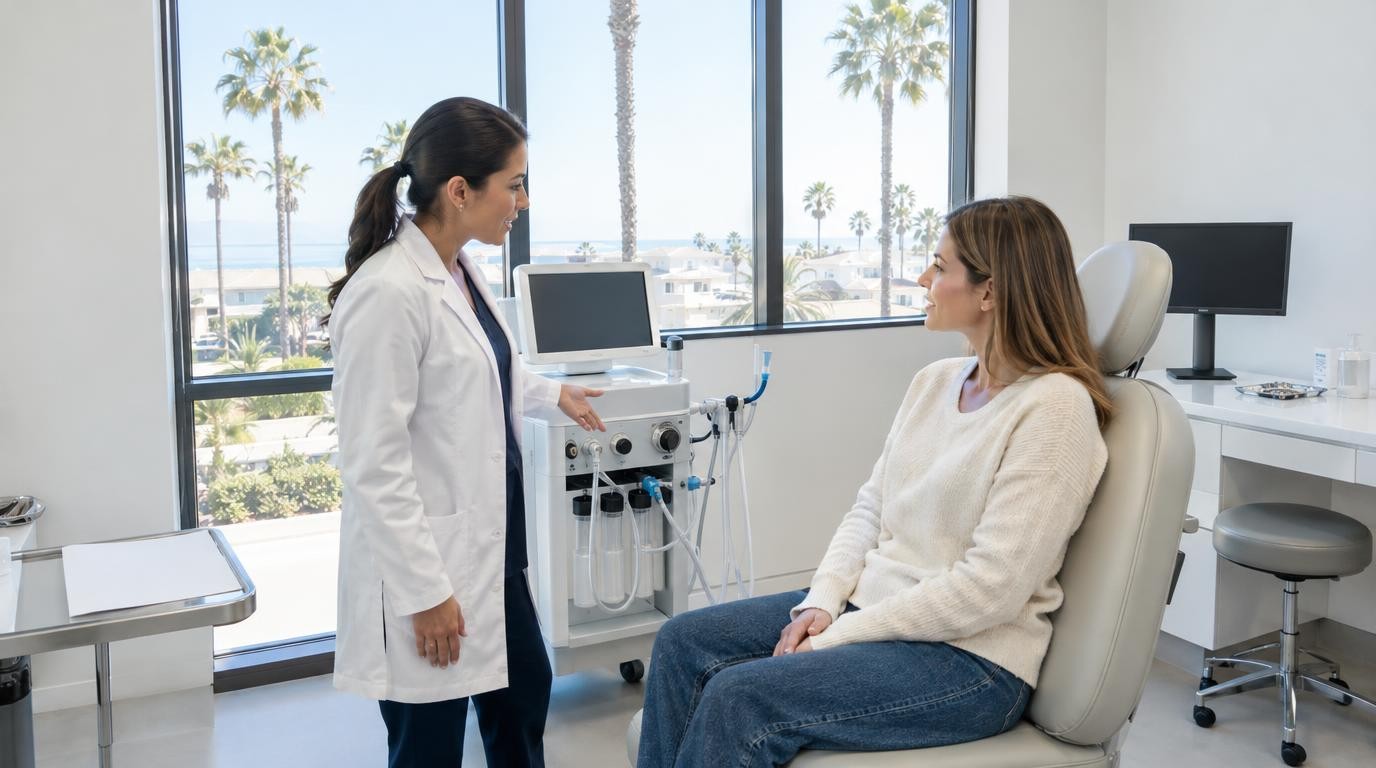
We offer tumescent liposuction, which uses an injected solution containing anesthetic and epinephrine; ultrasound-assisted liposuction, which uses sound waves to loosen fat; and power-assisted liposuction, which uses a vibrating cannula. The technique and amount of fat removed depend on the treatment area and the intended contour, with care to avoid an uneven or hollow result.
How long does recovery take after lower face liposuction?
Recovery after lower face liposuction usually involves early discomfort, bruising, and swelling, followed by a gradual improvement in contour. Most of our patients resume regular activities in about four to five days, although swelling takes longer to settle. Compression and limits on strenuous activity depend on the postoperative instructions for your procedure.

CosmetiCare’s practical recovery milestones are:
| Recovery stage | What to expect |
|---|---|
| CosmetiCare: the first few days | Mild discomfort, bruising, and swelling are normal. |
| CosmetiCare: the first several days | Snug bandages or a compression garment may be needed. |
| CosmetiCare: about four to five days | Many patients resume regular activities. |
| CosmetiCare: three to six weeks | Swelling continues to subside. |
| CosmetiCare: about four weeks | Strenuous activity should be avoided. |
Recovery varies, so these milestones are planning guides rather than automatic clearance to resume every activity.
What results can lower face liposuction deliver, and how long do they last?
Lower face liposuction can improve chin, jawline, and neck definition when localized fat is the main concern. The procedure cannot tighten significantly loose skin or promise a particular jawline shape. Early swelling can hide the new contour, which may change as healing continues.
At CosmetiCare, healing may continue for up to a year before the final result is fully visible. The fat cells removed by liposuction do not return, but remaining fat cells can expand and weight gain can affect the treated area’s appearance. Maintaining a stable weight helps preserve the contour without making the result unconditionally permanent.
What are the risks of lower face liposuction, and who should avoid it?
Swelling, bruising, and mild discomfort are expected in the first few days. Surgical complications can include bleeding, infection, lasting changes in sensation, uneven contours, and anesthesia-related problems. MedlinePlus’s liposuction guidance also identifies nerve injury, blood clots, and fat embolism as possible serious risks of liposuction; this list does not establish how often they occur after lower-face treatment.
Tell our team if you have an active infection, a significant health condition that is not well controlled, or take medicines or supplements that increase bleeding risk. Your surgeon may recommend further medical review or postponing surgery. Do not stop a prescribed medicine without advice from the clinician who manages it.
Careful planning and controlled fat removal help address contour concerns, but surgery cannot eliminate every risk. A published case report of neck bleeding after liposuction describes a patient who developed neck swelling and breathing difficulty. Seek emergency care immediately for rapidly increasing neck swelling or any difficulty breathing after the procedure. A single case report cannot establish how often this complication occurs.
Contact your surgical team promptly about fever, increasing redness, or symptoms that worsen rather than improve.
When is a facelift or neck lift better than lower face liposuction?
A facelift or neck lift may be better when pronounced loose skin or sagging tissue, rather than localized fat, is the main reason the lower face or neck lacks definition. Liposuction removes fat; lifting procedures address tissue position and excess skin. When both localized fat and significant skin laxity are present, a combination of liposuction and a lifting procedure may be considered.
A neck lift can address excess neck skin and tighten underlying muscles; a facelift can address lower-face sagging and jowls. That does not make lifting the automatic choice for someone with a full chin: the underlying cause of the contour matters. Readers comparing surgical treatment with less invasive approaches can also explore our guidance on non-surgical jawline contouring options.
For selected fat beneath the chin, we can also discuss CoolSculpting. It is a nonsurgical option for the chin, not other facial areas. It may require multiple sessions and generally produces a less dramatic change than one liposuction procedure. It does not remove loose skin or treat every cause of lower-face fullness.
What surgery can slim the face?
Facial liposuction can reduce suitable localized fat deposits, while a facelift or neck lift may improve a heavy-looking lower face when sagging is the main issue. A weak or receding chin may call for chin augmentation rather than more fat removal. No single operation slims every face in the same way.
Frequently Asked Questions
How risky is a lower face lift compared with lower face liposuction?
A lower facelift is generally more extensive than isolated liposuction: it lifts and repositions tissue, while liposuction removes selected fat. Facelift risks include bleeding, infection, anesthesia complications and, rarely, nerve injury, as Mayo Clinic explains. Liposuction also carries risks, including bleeding, infection, uneven contours and changes in sensation. We cannot give you a reliable head-to-head complication percentage for these procedures; your individual risk depends on the surgical plan, anesthesia and your health.
Can lower face liposuction be done with local anesthesia?
Yes. Liposuction may be performed with local anesthesia, intravenous sedation, or general anesthesia, depending on the procedure and patient. Tumescent liposuction can often be performed with local anesthesia; the nature of the planned procedure helps determine the choice.
How long does lower face liposuction surgery take?
Procedure time depends on the number of areas treated and the surgical plan. The American Board of Cosmetic Surgery patient guide gives a general liposuction range of under an hour to three hours or longer; it is not a specific estimate for lower-face liposuction.
Can chin liposuction be combined with a chin implant?
Yes, chin liposuction can be combined with chin augmentation when both excess fat and a weak or receding chin contribute to the profile. The American Board of Cosmetic Surgery notes that a qualified surgeon can place a chin implant during neck liposuction, typically using the same incisions.
Should I reach my goal weight before lower face liposuction?
You should aim for a stable weight near your goal before liposuction, rather than using surgery to lose weight. At CosmetiCare, we recommend being within 10 to 15 pounds of your goal weight before liposuction. This helps us target stubborn fat while making it easier to maintain your contour afterward.
How is chin liposuction different from Kybella injections?
Chin liposuction surgically removes fat from beneath the skin; Kybella (deoxycholic acid) is a prescription injection used to reduce fat beneath the chin in adults. Cleveland Clinic notes that Kybella may be an option when there is not excessive fat or skin laxity. Kybella should not be injected into an area with an active infection. Injection-site swelling, bruising, pain and numbness can occur; warnings include nerve injury that can cause an uneven smile, difficulty swallowing, and injection-site tissue injury. Neither treatment removes significantly loose skin.
How can you decide whether lower face liposuction is right for you?
Start by identifying whether the fullness you see appears to come from localized fat, loose skin, or both. Then consider the recovery commitment and the limits of fat removal before reviewing treatment areas, technique, risks, and alternatives with a surgeon. A personalized examination is the most useful way to connect those choices to your goals.
- Identify the concern. Note whether it is beneath the chin, along the jaw, in the lower face, or in the neck, and whether sagging skin is also present.
- Set realistic expectations. Jawline contouring through liposuction can reduce selected fat, but it cannot create the same change as lifting loose tissue.
- Review the plan and recovery. Ask which areas are suitable, how the surgeon would approach them, what aftercare involves, and which alternatives deserve consideration. For fullness specifically beneath the chin, our discussion of Kybella for neck fat explains another treatment to ask about.
If you are considering lower face liposuction, contact CosmetiCare for a consultation in Newport Beach, California. Our team can assess your anatomy, discuss whether facial liposuction or another procedure better addresses your goals, and help you review the individual outcomes in our patient gallery without treating them as a promise of your result.
This information is general and is not medical advice. Talk to a licensed clinician about your own situation before making a treatment decision.
